Virtual Try-On & AI-Driven Fashion Suggestions

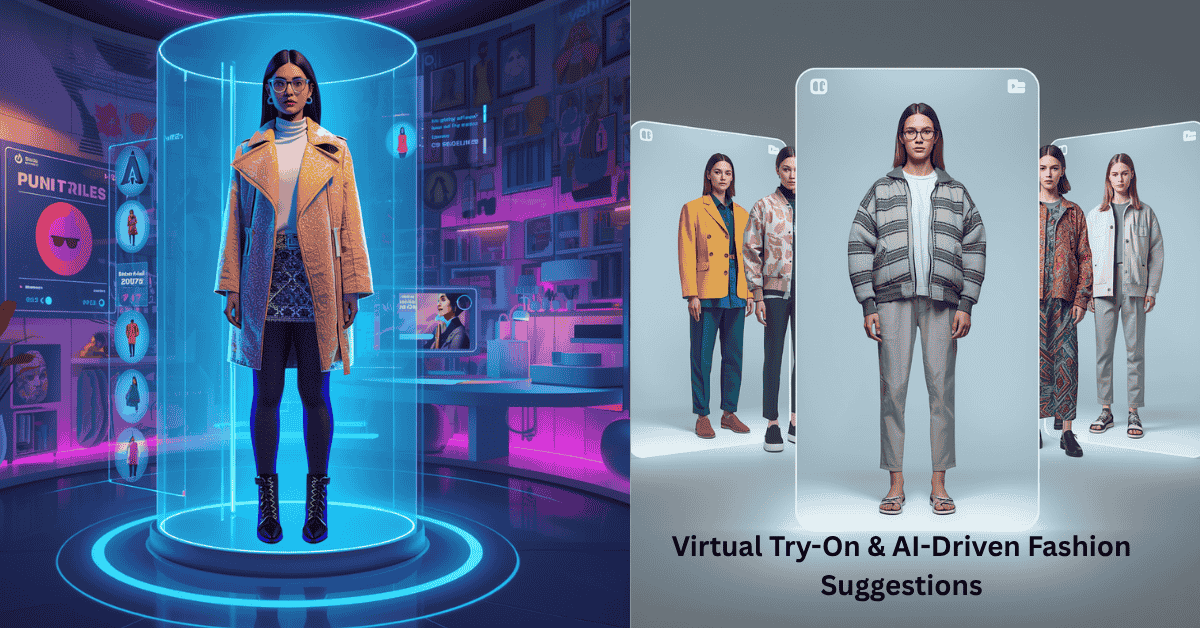
Combining AR Try-Ons with AI Fashion Advisors Boosts Customer Confidence and Lowers Returns for Clothing and Accessories
Overview
Online fashion retailing has developed quickly over the past few years. Shoppers can now view thousands of products, easily compare them, and shop from their own location. Nevertheless, a significant challenge persists and that is the concern of uncertainty.
When shopping, customers always wonder:
How will I get this dress properly fitted for me?
How will I get this color that matches my skin tone?
How will I get a pair of glasses that will look great on me?
Because customers can not get a physical interaction with the products, they become reluctant to make a purchase. Customer reluctance equals high return rates, and none of this is especially true for the fashion and accessory sectors.
To counter this concern, companies are introducing Virtual Try-On (VTO) technology along with AI. With these new technologies, customers can get digital interaction with the product and get personalized fashion recommendations.
The merging of these technologies is providing customers with new and improved ways of shopping digitally.
How does Virtual Try-On Work?
Virtual Try-On (VTO) technology allows customers to view a product on themselves using a mobile device, a web camera, or a photo that the customer has uploaded.
Products like
Clothes
Glasses
Shoes
Jewelry
Makeup
can be overlaid onto a real image of a user using Augmented Reality and Computer Vision.
This technology creates a realistic preview of the items boosting the possibility of a user making a purchase.
Get Started Today
Ready to transform your fashion store with AI and Virtual Try-On?
Contact the experts now:
Contact AMZ DOC for Best Results
Let AMZ DOC help you deliver a smarter, more engaging shopping experience—and turn visitors into loyal customers.
What are AI-Powered Fashion Recommendations?
AI-powered fashion recommendations are systems that analyze data of customers to provide recommendations of products that fit the customer’s style, preferences, and other requirements.
Data that is analyzed includes:
Previous purchases
History of websites visited
Measurements of the body
Preferred colors
Current fashion trends
AI works like a personal stylist and assists the user in picking the most suitable outfits.
Why Virtual Try-On and AI Recommendations Matter
The fashion industry deals with a lot of personal and emotional purchases. Customers want to be confident with their choice.
Customers who cannot try the products have some feelings of doubt. They might end up getting the incorrect size, style or color which leads to returns.
The combination of Artificial Intelligence and Virtual Try-On technology gives customers the opportunity to see how real items look on them and provide them with tailored suggestions. This leads to better decisions for the customer and satisfaction.
How Virtual Try-On Works
- Image Capture
The user captures the image in real time with a camera or can upload an image.
- Body or Face Detection
AI captures certain features like
Face
Body
Shoulders
Skin
- Product Mapping
The chosen product is digitally positioned on the image.
Examples:
Glasses rest on eyes
Clothes contour to body
Lipstick complements lips
- Real-Time Rendering
The system does:
Lighting
Movement
Angles
to render it how it would be in reality.
How AI Fashion Recommendation Works
- Data Collection
AI gathers data from:
User behavior
History of purchases
Style preferences
Demographics
- Pattern Recognition
AI detects patterns such as:
Favorite colors
Brands
Size
Fit
- Style Coordination
It offers items that fit:
User preference
Trend
Events (casual, business, etc.)
- Infinite Learning
The more the user interacts, the better it gets.
VTO and AI Together
When the two technologies merge, the true potential is unlocked.
Example Journey:
User picks a shirt
AI offers styled pants and shoes
System sizes based on past data
User buys the shirt
This creates a complete personalized shopping experience.
Benefits for Customers
- More Confidence
Customers can see how products look before they buy.
- More Suitable and Fashionable Options
AI assists in selecting the right size and style.
- More Engaging Experience
The process of shopping becomes more enjoyable and interactive.
- More Efficient
No need to buy in a physical store.
Business Advantages
- Lower Return Rate
Customers making informed decisions returns are reduced.
- Improved Conversion Rate
Purchases are made more frequently with increased confidence.
- Higher Average Order Value
AI recommends add-on items.
- Improved Customer Loyalty
Trust is formed with personalized interactions.
- Improved Stock Management
Preferences are understood for better stocking decisions.
Use Cases
- Eyewear
Customers can see how some glasses would look on their face.
- Cosmetics
The testing of some lipsticks or foundations on users is possible.
- Clothing
Customers can fit some clothes virtually.
- Shoes
Customers can see how some shoes would look on their feet.
- Accessories
Customers can preview some rings, necklaces, and earrings.
Potential Scenarios
Scenario 1: Purchasing Sunglasses
The user opens the application, activates their camera, and will virtually fit some sunglasses. AI will recommend frame models according to the shape of the face.
Scenario 2: Purchasing a Dress
The user provides a photograph. The system will fit various dresses and will recommend the dress type based on the body type.
Scenario 3: Assembling an Outfit
AI will recommend a complete outfit according to the users preferences, including shirt, pants, shoes, and accessories.
Problems and Restrictions
- Precision
Fitting may not always be 100% accurate.
- Technology Requirements
Camera quality and internet speed are important.
- High Development Cost
AR and AI systems are costly to build.
- Privacy Concerns
Sharing images and personal information may cause user concerns.
- Limited Real Feel
Virtual try on solutions cannot replicate the physical touch and feel of fabrics.
Best Practices for Businesses
Provide guides for accurate sizing
Render AR quality at a high level
Ensure user data and privacy are protected
Simplify and user-friendly interface is the goal
Models of AI are to be improved continuously
Adopt flexible return policy
Future of Virtual Try-On & AI Fashion
The future is highly promising.
- Advanced 3D Avatars
Customers will have their own realistic digital avatars.
- Integration with Metaverse
Users will be able to try on clothes digitally in the metaverse.
- Smart Mirrors
AR based instant try-ons will be available in physical stores.
- Voice Based Styling
Outfit suggestions will be interactive through AI assistants.
- Hyper-Personalization
All suggestions will be personalized.
Why Businesses Should Adopt This Technology
Adopting AI recommendations and VTO will help businesses to:
Differentiate in competitive markets
Satisfy customers
Lower costs of operations
Increase number of purchases and customer retention
Future customers will expect these features.
Conclusion
The use of AI-enabled fashion recommendations and virtual try-on technology is revolutionizing online shopping. Businesses use augmented reality and proprietary technology to create customized shopping experiences. Customers can try, see, and choose with no uncertainties.
The challenges may be unparalleled, however, technology is advancing. Try-on solutions will become more accurate and readily accessible to consumers. Businesses who use augmented reality technology will become leaders in the fashion industry.
FAQs
Q1: What is Virtual Try-On?
Virtual try-on allows customers to see how products look on them.
Q2: How do AI fashion recommendations work?
AI fashion recommendations work by analyzing user data and suggesting relevant apparel and accessories to them.
Q3: Does Virtual Try-On improve sales?
Yes, Try-on technology improves customer confidence, and therefore increases conversion rates.
Q4: Can Virtual Try-On reduce returns?
Yes. False purchases are avoided by improving visualisation.
Q5: Is this technology expensive?
Long-term benefits outweigh the initial cost
Q6: Is Virtual Try-On accurate?
Virtual try-on technology is advanced, but may not be 100 percent accurate.
Q7: Which industries use this technology?
The fashion, beauty, eyewear, shoes, and jewelry industries.
Q8: What is the future of AI in fashion?
Increased tailoring in customer preferences, improved precision, and combined use with augmented reality.