Autonomous Warehousing & Robotics for Smart Logistics

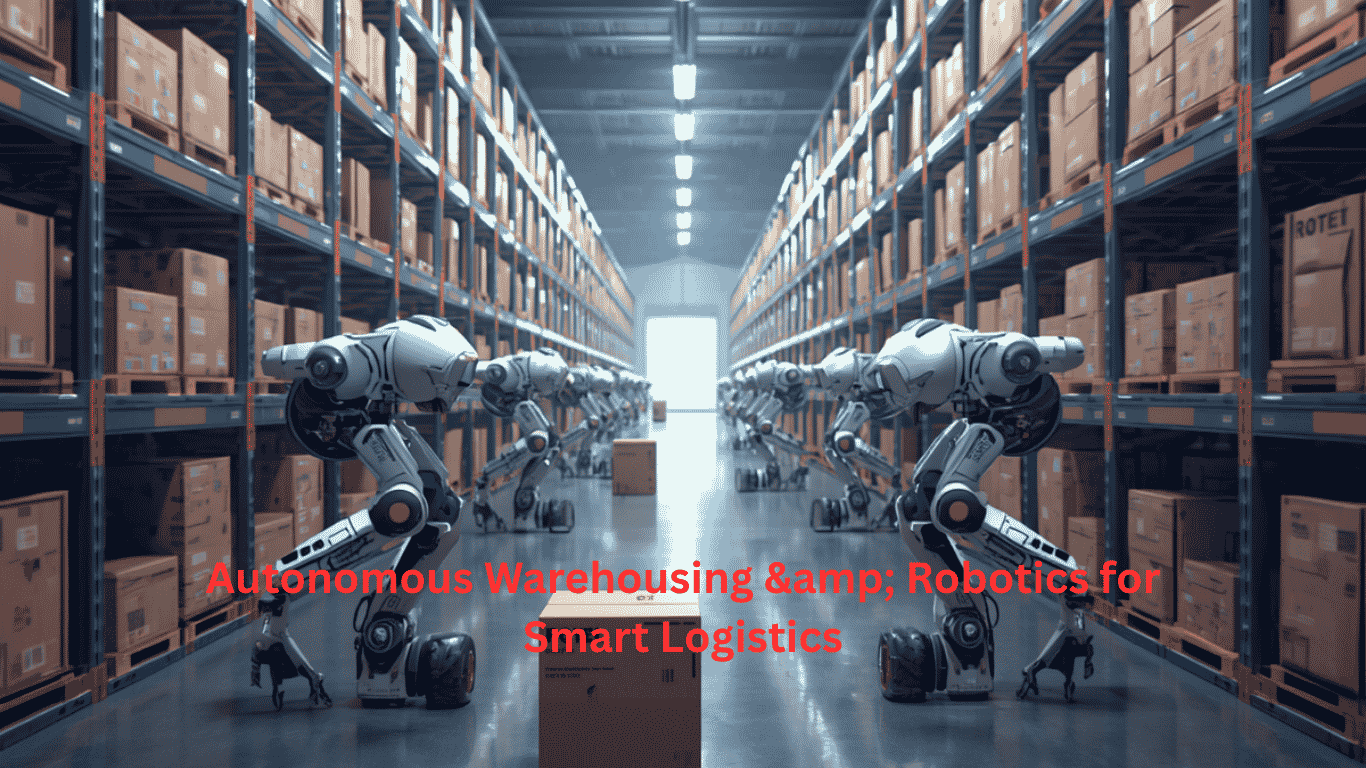
Using AI Bots to pick, pack, sort, and manage inventory for higher efficiency
According to a survey performed by “We Supply America” over half of Americans ranked having their products in two days or less (timely delivery) as the most important part of product quality. Conventional warehouses that used to be completely dependent on manual labor and one-dimensional systems are now emerging into a progressive autonomous ecosystem driven by Artificial Intelligence (AI) and robotics.
No longer mere visionary fiction, autonomous warehousing has arrived and is transforming logistics, retail, and manufacturing industries. Utilising AI-fuelled bots for manipulation, packaging, sorting and administration of inventory will help in facilitating a level of synergy which is completely unapproachable.
What is Autonomous Warehousing?
Autonomous warehousing is the concept of warehousing scenarios performed using AI, robotics and automation technologies with little to no human intervention.
These systems can:
Navigate warehouse floors independently
Accurately pick and pack orders
Sort products based on orders
Manage inventory in real time
Optimize storage and workflows
Where the goal is a self-operating warehouse — free of issues and maximised output.
Key Components of Autonomous Warehousing
AI-Powered Robots
Some advanced robots, fitted with sensors, cameras and AI algorithms can take on sophisticated jobs like:
Item picking
Shelf scanning
Transportation
Automated Guided Vehicles (AGVs)
AGVs move goods from one point to another in a warehouse along predefined paths.
Autonomous Mobile Robots (AMRs)
While AGVs stick to a set path, AMRs use AI to find their way and avoid barriers.
Warehouse Management Systems (WMS)
Network of software platforms coordinating inventory, orders and workflows.
Computer Vision
Allows robots to detect, find and handle products correctly.
How It Works: Warehousing AI Robotics
AI-based warehouse systems function through a set of technologies:
Data Collection
Sensors and IoT devices collect real-time data on:
Inventory levels
Order demand
Movement patterns
Machine Learning Algorithms
AI models analyze data to:
Predict demand
Optimize routes
Improve picking accuracy
Decision-Making Systems
Autonomous decisions taken by robots include:
Selecting the shortest path
Choosing optimal picking sequences
Adjusting workflows dynamically
Core Applications of Warehouse Robotics
Robotic Picking
Mobile robots and robotic arms can:
Identify items using computer vision
Pick products from shelves
Handle fragile items with precision
Benefits:
Faster order fulfillment
Reduced picking errors
24/7 operation
Automated Packing
AI systems optimize packaging by:
Selecting the right box size
Minimizing packaging material
Ensuring product safety
Impact:
Lower shipping costs
Improved sustainability
Faster packing times
Intelligent Sorting
Robots can sort items into various categories based on:
Destination
Order priority
Product type
They are able to handle thousands of items per hour at a very high accuracy rate.
Inventory Management
Autonomous systems monitor inventory in real time by:
Scanning shelves continuously
Detecting stock shortages
Updating databases automatically
This will save time in manual stock checks and reduced discrepancies.
Order Fulfillment Optimization
AI orchestrates the entire fulfillment process:
Assigns tasks to robots
Optimizes workflows
Reduces bottlenecks
Benefits of Autonomous Warehousing
Increased Efficiency
They also work faster and longer without fatigue than humans.
Improved Accuracy
AI minimizes human errors in picking and inventory tracking.
Cost Reduction
Reduced labor costs and operational inefficiencies.
Scalability
Supercharge operations during peak seasons.
Enhanced Safety
Robots perform dangerous work and, in turn, decrease workplace accidents.
Real-Time Insights
Data-driven decisions improve overall performance.
Challenges in Implementing Warehouse Robotics
High Initial Investment
Automation requires significant upfront costs.
Integration Complexity
It is difficult to integrate robotics with an existing system.
Workforce Adaptation
Employees must be trained to perform alongside robots.
Maintenance Requirements
Robotic systems need continuous monitoring and maintenance.
Human + Robot Collaboration
Autonomous warehouses are not meant to be a replacement for humans — they’re an augmentation of human skill.”
Collaborative Robots (Cobots)
Cobots work alongside humans to:
Assist in picking and packing
Handle repetitive tasks
Improve productivity
Human Roles in Automated Warehouses
System monitoring
Exception handling
Strategic decision-making
Real-World Use Cases
E-Commerce Giants
Robots are used for the following by companies such as Amazon:
Order picking
Inventory movement
Sorting operations
Retail Distribution Centers
Retailers automate warehouses to:
Speed up deliveries
Manage high SKU volumes
Manufacturing
Factories use robotics for:
Component handling
Inventory tracking
How AI is Transforming Warehouse Optimization
AI enhances warehouse performance through:
Predictive Analytics
Forecast demand
Optimize stock levels
Route Optimization
Reduce travel time for robots
Improve workflow efficiency
Dynamic Slotting
Store high-demand items in easily accessible places
Future Trends in Autonomous Warehousing
Fully Autonomous Warehouses
End-to-end automation with minimal human interventions.
Swarm Robotics
Swarm Robotics: Robots acting together like a swarm.
AI + IoT Integration
Connected devices enabling smarter decision-making.
Digital Twins
Optimizing Simulation Models in Virtual Warehouses
Sustainable Automation
Reducing energy consumption and waste.
How to Implement Autonomous Warehousing
Step 1: Assess Needs
Look for processes that can be automated.
Step 2: Select Technologies That Are Suitable
Choose the robots and software based on business needs.
Step 3: Pilot Testing
Start with a small-scale implementation.
Step 4: Integration
Integrate with existing WMS and ERP systems.
Step 5: Training
Upskill employees for new roles.
Step 6: Scale
Expand automation based on results.
ROI of Warehouse Automation
Businesses typically see returns through:
Reduced labor costs
Faster order processing
Lower error rates
Increased customer satisfaction
Typically it runs from 1 to 3 years but ROI timelines vary.
Best Practices for Success
Start small and scale gradually
Use data to guide decisions
Focus on high-impact areas
Continuously optimize systems
Ensure cybersecurity measures
Conclusion
The futuristic world of autonomous warehousing and robotics AI tools are enabling companies to do everything from picking, packing, and sorting orders to managing inventory.
With such technology advances, autonomous warehouses will underpin the supply chains of tomorrow—allowing businesses to meet the rising demand and remain competitive in an ever-growing digital economy.
FAQs:
What is autonomous warehousing?
It is the automation of warehouse operations using AI and robotics.
What are warehouse robots?
Machines that do things like pick, pack and sort.
How Are AGVs And AMRs Different?
AGVs move on fixed paths while AMRs on dynamic ones.
How is AI helping warehousing or that sort?
It streamlines operations, forecasts demand and enhances precision.
Are warehouse robots expensive?
These systems demand up-front investment but decrease costs in the long run.
Is warehouse automation for small businesses?
Yes, scalable solutions are available.
What is a WMS?
WMS — Warehouse Management System provides control over operations.
What is robotic picking?
Two mobile robots picking items from storage locations.
What is automated sorting?
Robots sort things according to specific laws.
How accurate are warehouse robots?
They give extremely low error rate and high right percentage.
Do robots replace human workers?
No, they complement human roles.
What are cobots?
Collaborative robots working alongside humans.
What industries use warehouse robotics?
E-commerce, retail, manufacturing, logistics.
What is inventory automation?
AI-driven real-time tracking and management of stock
How do robots navigate warehouses?
Via cameras, sensors and AI algorithms.
What is route optimization?
Creating the shortest paths & fastest way of movement
What is predictive maintenance?
AI forecast for robot maintenance.
What is swarm robotics?
Multiple robots working together efficiently.
How long does implementation take?
Depends on scale—weeks to months.
What is warehouse digitization?
Turning manual processes digital
What is real-time tracking?
Monitoring inventory and operations instantly.
What are smart warehouses?
Automated warehouses powered by AI, IoT, and other automation
What is order fulfillment automation?
Automating customer order fulfilment.
How does automation improve safety?
Minimizes human interaction with exposure.
What is dynamic slotting?
Product placement based on demand optimization
What is a digital twin?
A computer simulation of a warehouse.
Can robots work 24/7?
Yes, with minimal downtime.
What is logistics automation?
Applying technology to automating supply chain operations
How does automation reduce errors?
By minimizing manual intervention.
What does the future hold for warehouse robotics?
Fully autonomous, AI-driven ecosystems.