Augmented Reality (AR) Product Customization Guide

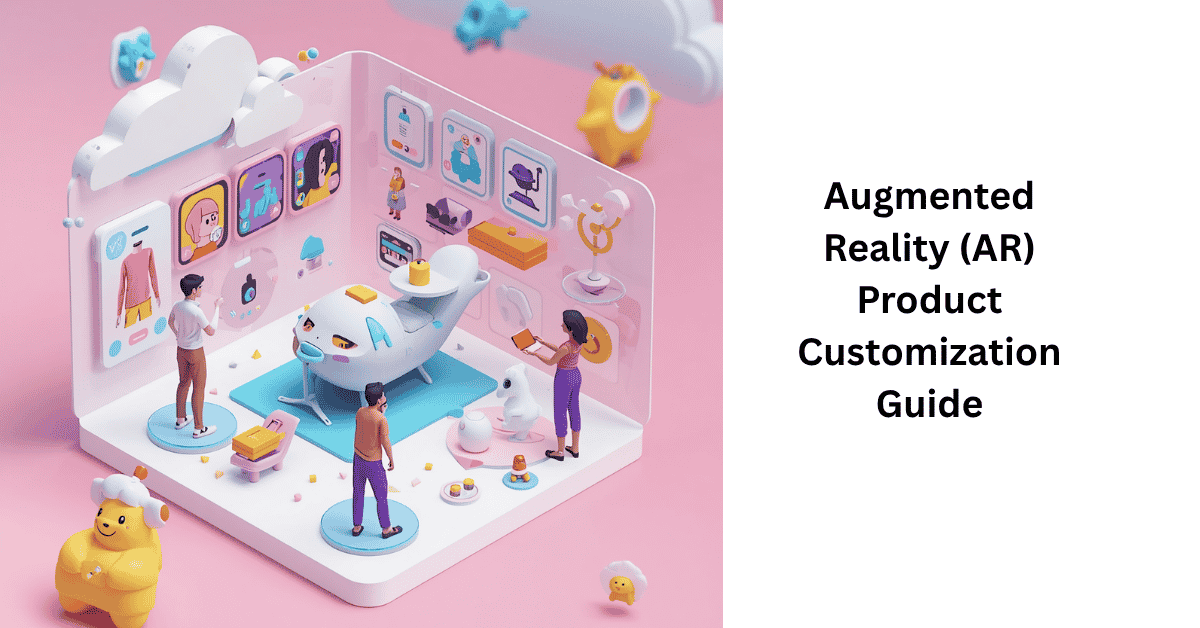
Revolutionising Personalization with Immersive AI-Driven Experiences
Introduction
With the advent of digital transformation, customers expect more than just static product images or one-size-fits-all options. They seek immersive, interactive, and personalized shopping experiences that enable them to visualize products prior to purchase. This need has given birth to AI-Powered AR product personalization.
AR: Augmented reality allows customers to visualize products in real-life environments utilizing their smartphone, tablets or AR glasses. AR-powered smart recommendations based on users’ preferences for colors, styles, features and configurations complement the benefits of AI when they merge with one another.
So AR combined with AI is making product customization increasingly engaging, accurate, and customer-focused. A leap forward ahead of the current e-commerce, retail, and manufacturing capabilities.
What is AR Product Customization?
Augmented reality (AR) product customization enables users to customize and personalize products within an AR environment that augments the real world. Customers can:
Change colors and textures
Adjust sizes and dimensions
Add or remove features
Visualize products in their space
For example:
Testing Out Different Colors for Your Living Room Sofa
Customizing sneakers with unique designs
Designing furniture layouts in your home
Artificial Intelligence (AI) plays a significant role in the customization of augmented reality experiences.
AR brings visualization, and AI is necessary for intelligence and personalization.
Smart Recommendations
AI recommends styles, colors, and toppings based on user preferences.
Behavior Analysis
Analytics of user clicks to improve recommendations in real time.
Predictive Customization
Predicts what the customer may want based on trends and past behaviour
Image Recognition
Offers environment recommender for matching products with surroundings
How AR Product Customization Works
Device Camera Activation
The augmented reality system accesses the device camera to scan the real-world surroundings.
Object Placement
In the case of AR, virtual products are positioned into the users’ environment.
Customization Interface
Controls that allow users to interact with the product.
AI Recommendation Engine
Rather, AI makes in-the-moment suggestions for how to improve or strengthen them.
Real-Time Rendering
Changes rendered instantaneously and realistically.
Key Features of AR Customization
Real-Time Visualization
Adds customers also notice an immediate change when they customize products.
Interactive Design
It makes it easy for users to try out several options.
Accurate Scaling
Products presented in appropriate dimensions.
Environmental Integration
AR customizes products to a product’s lighting and setting.
Multi-Device Compatibility
Compatible with smartphones, tablets and AR glasses.
Benefits for Customers
Better Decision-Making
Customers can see products before purchasing.
Increased Satisfaction
Personalized products meet individual preferences.
Reduced Returns
Accurate visualization minimizes purchase errors.
Engaging Experience
Interactive customization makes shopping enjoyable.
Confidence in Purchases
Customers know they’re making better decisions.
Benefits for Businesses
Higher Conversion Rates
Interactive experiences result in increased purchasing.
Reduced Return Costs
Fewer mismatched expectations reduce returns.
Enhanced Brand Differentiation
AR gives a new image of the brand that looks innovative.
Valuable Customer Insights
AI gathers data on what we like and how we act.
Increased Customer Loyalty
Personalized experiences build stronger relationships.
Use Cases Across Industries
Fashion & Apparel
Customers can see how clothes, shoes, and accessories look on them without putting in an effort.
Furniture & Home Decor
Test customization and positioning in real environments.
Automotive
Spin up or customize colors, interiors and features in AR.
Electronics
Cosmetics & Beauty
Virtual makeover — to try different looks and shades.
AI-Powered Personalization in AR
AI enhances AR customization through:
Style Matching
Recommends designs according to user preferences.
Trend Analysis
Recommends popular styles and configurations.
Context Awareness
Make suggestions that adapt to your environment and routine.
Dynamic Learning
Improves recommendations over time.
Technologies Behind AR Customization
Augmented Reality (AR)
Apr 19, 2024 — Overlays Digital elements onto the real world
Artificial Intelligence (AI)
Drives personalization and recommendations.
Computer Vision
Recognizes objects and environments.
3D Modeling
Creates realistic product representations.
Cloud Computing
Parses data and aids in real-time presentation.
Challenges in AR Product Customization
High Development Costs
Developing AR experiences is expensive.
Device Limitations
Advanced AR features may not be supported on all devices.
Data Privacy Concerns
That’s user data that needs to be securely managed.
Accuracy Issues
How imperfect rendering can cause a loss of trust in the user.
Integration Complexity
Performance: Must integrate effortlessly with e-commerce rates.
Best Practices for Implementation
Start with High-Impact Products
That is their full-time job: guiding products.
Optimize for Mobile
Ensure smooth performance on smartphones.
Use High-Quality 3D Models
Realistic visuals improve user experience.
Leverage AI Insights
Continuously refine recommendations.
Provide Simple Interfaces
Make customization intuitive and user-friendly.
AR and Omnichannel Retail
AR customization creates a bridge between online shopping and offline retail:
AR kiosks bring digital to physical retail
Mobile apps enable at-home customization
AR features in websites for online shoppers
This results in a seamless omnichannel experience.
Real-World Scenario
Let’s say a customer is shopping for a sofa:
They launch an AR app and drop a virtual sofa into their living room
AI picks out colors that coordinate with their interior
Customer changes size and fabric live
For additional recommendations such as cushions, pillows, etc.
This experience makes the purchase decision stronger.
Future Trends
AR Glasses Adoption
Hands-free AR experiences will go mainstream.
Hyper-Realistic Rendering
Holograms will make virtual goods feel as real as physical objects.
AI + AR Integration
Deeper personalization with smarter recommendations.
Social AR Shopping
Customers design, share, and work together on designs.
Voice-Controlled AR
The combination of voice assistants and AR will allow seamless interaction between the user and their environment.
Impact on Customer Behavior
AR customization redefines the way customers shop:
Encourages exploration and experimentation
Increases engagement time
Builds emotional connection with products
Reduces uncertainty in purchasing decisions
Ethical Considerations
Data Privacy
Safeguard Data and Enhance Transparency
Realistic Representation
Avoid misleading visuals.
Accessibility
Ensure AR experiences are inclusive.
Responsible AI Use
Prevent biased or manipulative recommendations.
FAQs:
What is AR product customization?
It lets customers customize products in a real-world space with AR.
How does artificial intelligence take augmented reality to the next level?
Chatbot stores make better, unique content by enhancing user leads through Chatbots.
Do customers need special devices?
Most, but not all AR experiences run on smartphones and tablets.
Which industries benefit the most?
Fashion & Furniture automotive electronics and beauty
Does AR reduce product returns?
Yes, improved visualization means better purchases.
Is AR expensive to implement?
While upfront expenses may be high, long-term benefits far exceed them.
Can small businesses use AR?
Yes, there are many platforms that provide scalable AR solutions.
What are the main challenges?
Become Cost, compatibility of a device + complexity of Integration
How accurate is AR visualization?
It is technology and also the quality of 3D models ensures accuracy.
What Does the Future Hold for AR in E-commerce?
It’s going to be more immersive, personalized and integrated.
Conclusion
AI-Driven Augmented Reality Product Customization Businesses can provide highly personalized and engaging shopping experiences by combining intelligent recommendations with immersive visualization.
With AR technology becoming more accessible and AI developing further this method will not only become prevalent, but it will also integrate into the e-commerce and retail field. In conclusion, AR customization is a game-changer in marketing strategies this 2023 as it opens up new possibilities for brands to connect with their customers in meaningful ways.
AR-powered customization has become a major force because in an age that thrives on personalization and experience, it is not just innovation but rather the future of shopping.