Amazon Ads Optimization: Complete Guide for Sellers

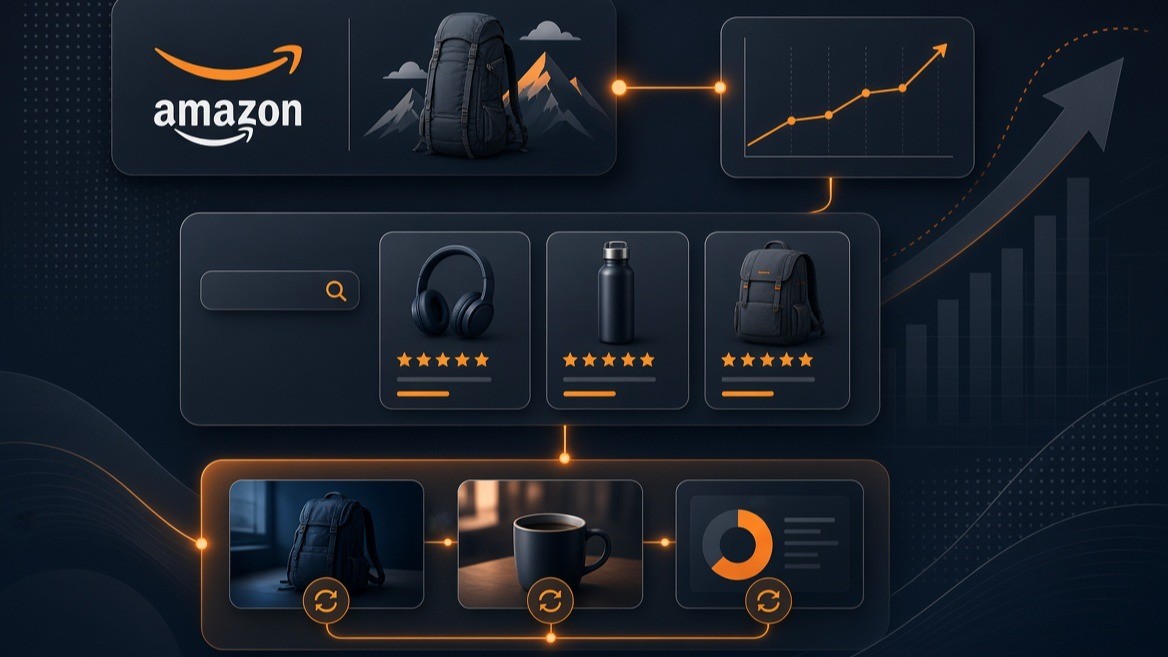
Amazon advertising is no longer optional. With rising competition and CPCs, brands that treat ads as a “set it and forget it” expense leave significant profit and growth on the table. A structured, full-funnel approach across Sponsored Products, Sponsored Brands, and Sponsored Display turns ad spend into a predictable growth engine.
This guide covers how each ad type works, realistic 2026 benchmarks, optimization cadences, and how a data-driven partner like AMZ DOC brings disciplined frameworks that stop wasted spend and compound results.
Understanding the Three Core Amazon Ad Types
1. Sponsored Products Stay in the Search Loop
Sponsored Products promote individual ASINs directly in search results and on product detail pages. These are high-intent “search ads.” Shoppers already looking for solutions are far more likely to buy from products that appear in these placements.
Role: Drive direct sales, build sales velocity, and improve organic rank through the ads-to-organic feedback loop. Best for: Most sellers as the foundation of any account. Key strength: Highest conversion rates of the three formats.
2. Sponsored Brands Build Awareness at the Top of Search
Sponsored Brands (often called brand ads) appear at the top of search results with your brand logo, custom headline, and multiple products (or video). They require Brand Registry and typically send traffic to a Brand Store or product detail page.
Role: Awareness and brand discovery. They showcase your brand identity prominently when shoppers search category or competitor terms. Best for: Brands ready to defend their name, expand category presence, and introduce shoppers to the broader catalog. Key strength: Strong top-of-funnel impact and new-to-brand reach when paired with strong creative and a well-built Store.
3. Sponsored Display Retarget and Defend
Sponsored Display (now often simply called display ads) uses product targeting, audience targeting, and remarketing. It reaches shoppers who viewed your products, bought related items, or browsed relevant categories both on and off Amazon.
Role: Retargeting warm audiences who didn’t convert, competitor defense, and complementary product discovery. Best for: Accounts with meaningful traffic volume that can feed a retargeting pool. Key strength: Recaptures high-intent browsers at a lower cost per click than pure search campaigns.
How they work together: Sponsored Products harvest existing demand. Sponsored Brands create and amplify demand at the top of search. Sponsored Display closes the loop by bringing back shoppers who engaged but didn’t buy. Running only one type leaves money on the table; a coordinated mix compounds results.
2026 Performance Benchmarks
Benchmarks vary significantly by category, price point, margin, and account maturity. Use these as directional ranges (cross-category data from multiple 2026 sources), then calibrate to your own break-even ACoS (pre-ad contribution margin).

Broader context
- Platform-wide blended ACoS often lands in the 25–35% range.
- Healthy TACoS (Total Advertising Cost of Sales = ad spend ÷ total revenue including organic) for mature brands typically sits at 8–15%. Launch phases can run higher (15–25%+) intentionally to build rank and reviews.
- Category examples: Food & Grocery and Books often show lower ACoS; Clothing & Apparel runs higher due to returns and competition.
Always measure against your unit economics. A 35% ACoS can be highly profitable on a high-margin product and unprofitable on a thin-margin one. Track TACoS over time — a declining TACoS with rising revenue is one of the strongest health signals.
Recommended Budget Allocation by Stage

Adjust seasonally (e.g., shift more toward Sponsored Products during Q4 or Prime Day) and by category dynamics.
Optimization Cadences That Actually Move the Needle
Sponsored Products (weekly focus)
- Mine search term reports: harvest converting terms into exact match, add negatives aggressively.
- Bid adjustments by performance and placement (Top of Search usually converts best).
- Pause or reduce underperforming targets after sufficient data (e.g., 20+ clicks with zero sales).
- Structure campaigns by match type and intent (auto for discovery, exact for profit, phrase/broad carefully controlled).
Sponsored Brands (bi-weekly to monthly)
- Test headlines and creative (video often lifts CTR meaningfully).
- Review landing page performance (Brand Store vs. product page).
- Defend brand terms tightly while expanding into category and competitor keywords once SP data validates them.
- Monitor new-to-brand metrics alongside pure ACoS.
Sponsored Display (bi-weekly)
- Separate views remarketing, purchases remarketing, and prospecting/product targeting.
- Exclude existing customers where appropriate for pure acquisition goals.
- Refine audiences and creative; retargeting windows and ASIN-level performance matter.
- Expect longer attribution windows than pure search.
Account-level rhythm
- Daily: Budget pacing and stock/Featured Offer checks (ads stop serving without the Buy Box in many cases).
- Weekly: SP deep optimization + high-level SB/SD review.
- Monthly: Full funnel performance, TACoS trend, creative refresh, and structural adjustments.
- Quarterly: Strategy reset against category shifts and margin targets.
Common Pitfalls That Waste Ad Spend
- Running flat auto-only campaigns with no search-term harvesting.
- Using the same bids across match types or placements.
- Judging Sponsored Brands purely on last-click ACoS instead of awareness and new-to-brand impact.
- Adding Sponsored Display too early (before enough traffic exists) or ignoring it entirely once volume is there.
- Optimizing only ACoS while TACoS rises and organic sales stagnate.
- Neglecting listing quality ads amplifies whatever conversion rate your detail page delivers.
How AMZ DOC Turns Optimization into a Structured Advantage
Most brands leave money on the table through inconsistent processes, reactive bidding, and incomplete funnel coverage. AMZ DOC positions itself as a data-driven partner that installs repeatable frameworks instead of one-off tweaks.
Their approach typically includes:
- Full-funnel architecture across Sponsored Products, Sponsored Brands, and Sponsored Display aligned to your stage and margins.
- Rigorous search-term mining, negative keyword discipline, and placement-level bidding.
- Clear target ACoS and TACoS guardrails tied to unit economics.
- Regular creative and audience testing with transparent reporting.
- Integration with listing optimization so ads and organic rank reinforce each other.
With hundreds of accounts managed and substantial ad spend optimized, the focus is on turning ad investment into sustainable rank gains, higher conversion, and controlled TACoS rather than chasing vanity metrics.
Getting Started or Leveling Up
- Calculate your true break-even ACoS from contribution margin.
- Audit current structure: Are you over-indexed on one format? Is search-term hygiene in place?
- Build or refine the foundation with Sponsored Products first.
- Layer Sponsored Brands once you have validated keywords and Brand Registry.
- Add Sponsored Display once traffic volume supports meaningful retargeting.
- Commit to a consistent weekly/bi-weekly optimization cadence and track TACoS, not just ACoS.
Amazon Ads rewards structure, discipline, and continuous data-driven refinement. Brands that treat the three formats as a coordinated system and partner with specialists who bring proven frameworks consistently outperform those running campaigns on autopilot.
If your current setup is leaving spend inefficient or growth constrained, a structured audit against these principles is the fastest way to identify the highest-ROI fixes.