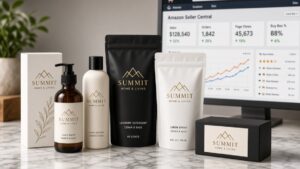
Amazon Product Research: Find Best-Selling Products


Amazon sellers launch one of the most profitable online business models, but you can not start well if you do not pick the product correctly. No amount of marketing activity can compensate for a product that is not profitable. This is the exact reason that product research for Amazon is a cornerstone to most profitable FBA or FBM amazon businesses.
Whether you are a newbie on your very first product launch or an old pro who is sharing nationwide success by expanding their catalog, garnering knowledge on discovering high-demand, low-competition products can make one heck of a difference in whether you win or fail.This guide covers real-world Amazon product research techniques, the most effective research tools, essential performance metrics, and the common pitfalls to avoid when identifying profitable products.
What Is Amazon Product Research?
Amazon product research: Before you decide on what to sell on Amazon, you basically do a deep analytical drill-down into the products, customer demand, competitors out there for every potential product in the market, prices of these products go around selling at pricing just optimal enough with profits built in.
The aim is to look for those products that:
Have strong customer demand
Generate consistent monthly sales
Face manageable competition
Offer healthy profit margins
Have long-term growth potential
Well research reduces risk and helps sellers invest in products with better probability of success.
Why Is Product Research Important?
Some of the consequences of selecting the wrong product are:
Slow sales
High storage fees
Low profit margins
Excess inventory
Poor customer reviews
Instead, picking an appropriate product will enable you to:
Increase monthly revenue
Build a profitable brand
Improve ROI
Reduce advertising costs
Scale your Amazon business faster
Elements of a Winning Amazon Product
These are the qualities of a product that is likely to make you money:
High Demand
You need to find products that are selling hundreds or thousands every month guaranteed
Low to Medium Competition
Do not compete in categories with giant brands, unless you have an advantage.
Healthy Profit Margin
Do your best to find products with a profit margin of 30% or more after Amazon fees, shipping costs, and advertising expenses.
Moderate Price Range
Most successful Amazon sellers sell products priced between $20-$70 that are affordable yet also provide healthy margins.
Lightweight and Compact
Products that are smaller generally have lower manufacturing, shipping and storage costs.
Evergreen Demand
Whenever possible, select products that people purchase year round rather than seasonal ones.
Best Amazon Product Research Methods
Browse Amazon Best Sellers
Amazon Best Sellers displays the products that Amazon customers best-selling items of all time in each category.
Pay attention to:
Product rankings
Customer reviews
Price points
Brand competition
It gives you a glimpse of the buying trends that are prevalent now.
Analyze Customer Reviews
Results | What customers loved and hated
Look for:
Common complaints
Missing features
Quality issues
Improvement opportunities
This knowledge will assist you in developing an improved version of an existing product.
Study Best Seller Rank (BSR)
Best Seller Rank estimates the popularity of products.
Generally:
Lower BSR = Higher sales
Higher BSR = Lower sales
BSR changes often, but it is still among the most reliable indicators of demand.
Use Keyword Research
Identifying the product demand through customers searching information.
Focus on:
Search volume
Keyword competition
Long-tail keywords
Seasonal trends
Higher search volume usually means it is in higher demand in the marketplace.
Analyze Competitors
Study successful listings by examining:
Product images
Titles
Bullet points
Pricing
Reviews
Ratings
Competitive analysis allows you to discover what gaps there are for you to fill.
Best Amazon Product Research Tools
There are many professional tools that make product research easy.
Helium 10
Features include:
Black Box
Xray
Keyword Research
Cerebro
Trend analysis
Great for both novice and expert sellers.
Jungle Scout
Popular features:
Opportunity Finder
Product Database
Sales Estimates
Supplier Database
Great for discovering profitable niches.
AMZScout
Provides:
Sales estimates
Competition analysis
Product tracker
Keyword explorer
Suitable for budget-conscious sellers.
Keepa
Keepa tracks:
Price history
Sales trends
Buy Box changes
Stock levels
Great Used for long term tracking of product performance.
Google Trends
Not Amazon-specific but useful for finding: Google Trends
Seasonal demand
Growing markets
Declining products
Regional popularity
Important Product Research Metrics
Before launching, successful sellers analyze multiple metrics.
Monthly Sales
Search for products that can sell a minimum of 300 units each month.
Revenue
Continued monthly revenue from products shows consistent demand.
Number of Reviews
Fewer than 300 reviewsWhat the lower number of reviews means is that there are fewer products competing for those few spots within the category.
Selling Price
NB: Price of between $20–$70 often profit better
Profit Margin
Aim for at least:
30% profit margin
100% ROI when possible
Competition Level
Steer clear of markets where hundreds or thousands of sellers have thousands of reviews.
Product Categories Worth Exploring
Popular Amazon categories include:
Home & Kitchen
Pet Supplies
Sports & Outdoors
Office Products
Beauty & Personal Care
Kitchen Accessories
Baby Products
Health & Household
Tools & Home Improvement
Automotive Accessories
Mistakes to Avoid
Many beginners make these mistakes:
Selecting items purely based on your individual taste
Never use assumptions, always use market data.
Ignoring Competition
Even with a high-demand product, too much competition can kill it.
Overlooking Profit Margins
Unless your profits disappear in Amazon fees, revenue matters very little.
Selling Seasonal Products Only
Seasonal products can tie up inventory and unsold stock for months.
Skipping Keyword Research
If you are not doing keyword research, your customers may never discover your listing in the first place.
Tips for Finding Hidden Opportunities
Consider products that:
Solve everyday problems
Have room for improvement
Bundle well with other products
Have repeat purchase potential
Appeal to passionate hobby communities
Those niches provide lower competition and higher buyer loyalty.
FAQs
What is Amazon product research?
Before selling on Amazon, you will need to gain an understanding of market demand vs competition and the profitability (cost/price) which is referred to as amazon product research.
Amazon Product Research Tools Comparison
Some of the most well-known tools are Helium 10, Jungle Scout, AMZScout and Keepa. All of them have features for sales estimation, keyword tracking, and competition analysis.
How much Profit a Product on Amazon should be making?
Most sellers aim for a margin of 30% or higher after all expenses (product cost + Amazon fees + shipping cost + advertising).
How can I tell which products are profitable?
To expect the profit, review estimated monthly sales, BSR (Best Seller Rank), competition, customer demands, pricing & total costs.
What if you are a complete newcomer to Amazon product research?
Yes. Understanding the Amazon landscape (even as a new seller) with data points like Amazon Best Sellers, customer reviews, keyword demand etc is a great research method while tools like Helium 10 or Jungle Scout are also beginner-friendly.
What is the number of reviews for similar products?
It is prudent to find products where the top seller has less than 300 reviews, because it allows newer listings to benefit from better rankings.
Should you choose Amazon FBA or FBM when starting a new business?
There is no right or wrong choice—it depends on whether your business is B2B or consumer-focused. Amazon FBA (Fulfillment by Amazon) provides Prime shipping and professional fulfillment services, while Amazon FBM (Fulfillment by Merchant) gives sellers greater control over inventory and order management. FBA is ideal for businesses that want to leverage Amazon’s global logistics network, whereas FBM offers more flexibility.
What is the perfect price point on Amazon?
This is why most experts suggest having products that are between the price ranges of $20 to $70, as this category is usually a no-brainer for customers and still has healthy profit margins.
Conclusion
To identify best-selling Amazon products, research not guesswork. Instead, through analyzing these factors, in addition to product demand and competition as well as pricing, profitability, and keyword trends you can discover products that are sales magnets while avoiding costly missteps. In the long run, using reliable research tools, keeping an eye on market trends and improving your strategy is all part of creating a successful Amazon business. The reality is that product research should never be a one-off task, and sellers who regularly make decisions based on solid data are in the best position possible to find long-term winning products.