AI-Driven Pricing & Dynamic Repricing: Maximizing Revenue with Intelligent Automation

Introduction: New Age Pricing Strategies
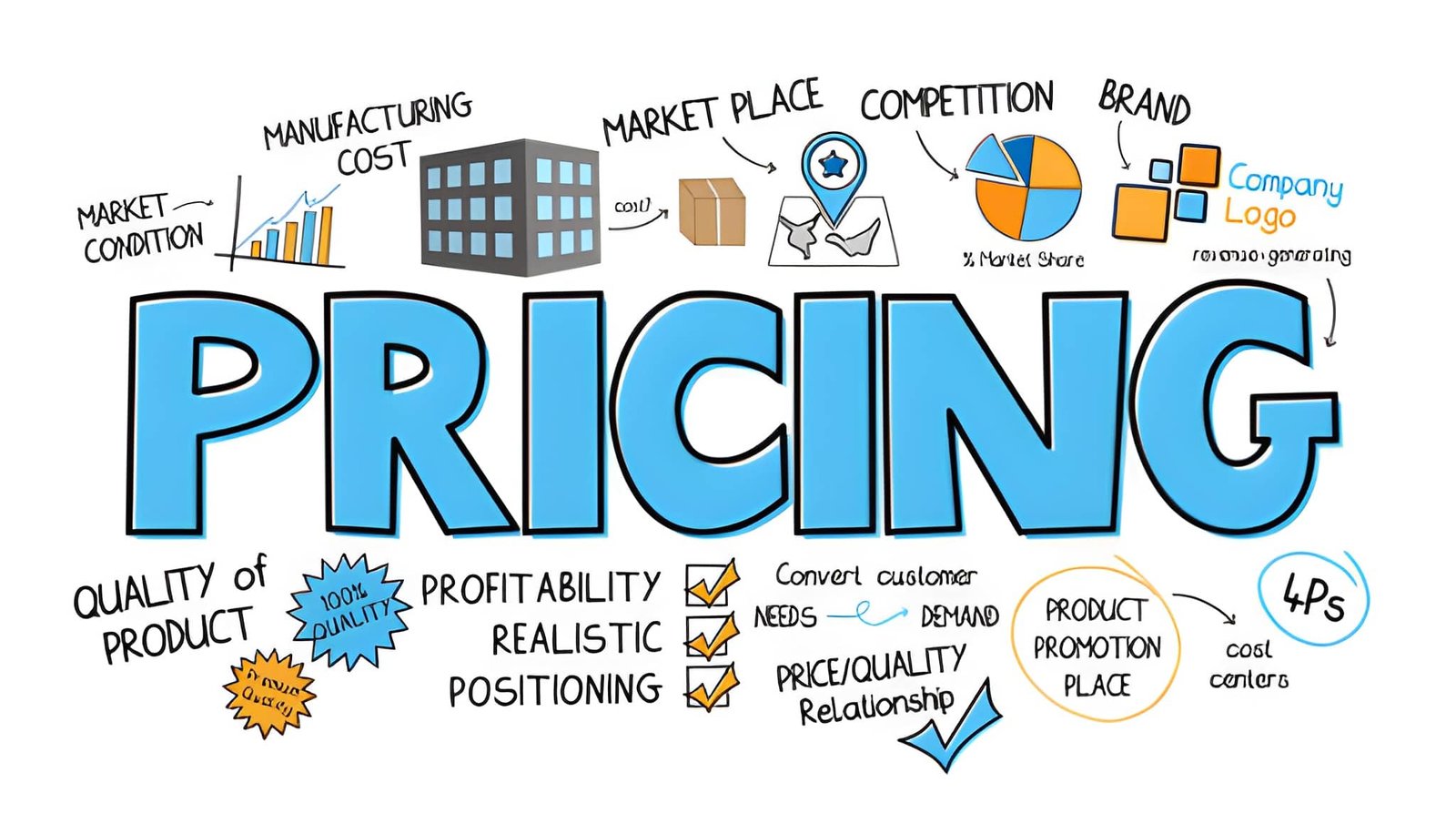
Pricing has always been a crucial part of any business plan because of how instantly profitability can change with a small change to pricing. New pricing strategies over time have been developed to optimize the business pricing plan based on operational costs, seasonality of the business, and competing firms to analyze what price should be set. Pricing strategy in the eCommerce business environment pricing strategy is a huge challenge.
The use of Artificial Intelligence has automated the pricing strategy within the eCommerce business by performing constant evaluations of competitor pricing, demand, and purchasing behavior to automatically change the pricing of a product.
In this piece we will analyze the pricing strategy using advanced Artificial Intelligence, the supporting data signals, the use strategic frameworks, the application of pricing strategy in the real world, the advantages and disadvantages, and the future of pricing strategies.Comprehending Pricing Enhanced By AI
What Does Pricing Enhanced By AI Mean?
Pricing enhanced by AI technologies means using machine learning and predictive analytics to find the best ways to set and optimize prices for products and services. AI can change prices and adjust pricing strategies based on different pricing strategies. AI can continually change prices based on:
- Analyzing numerous types of data
- Recognizing and identifying trends and correlations
- Determining future product and service demand
- Adjusting prices on a continual basis for the best revenue and profit maximization.
Dynamic repricing allows for continual price optimization based on ever-changing and shifting market changes.
Digital Pricing Challenges
Pricing for sales lacks due to:
- Traditional sales pricing lacks to adapt to the fast-moving pricing strategies of today’s consumers and competitors. Pricing, for example, can change many times a day.
- Competitors can change their prices multiple times a day.
- Competitors can utilize rapidly shifting customer demand to sell their products.
- Stock can create shift demand.
- Competitive pricing can shift perceived value demand.
Human error and price prediction bias create a gap that cannot be manually filled by setting or pricing. This gap can be bridged by AI.
Pricing AI System Elements
AI pricing creates compounding multiple signal effects through the data provided by the many queries that have been sent.
1. Real-time Signals of Demand
Demand shifting can be attributed to:
- Weather
- Economy
- Holidays and events
- Promotion
- Social media
- Seasonal trends
- Trends
AI models can identify:
- Page views
- Conversion
- Cart additions
- Search
- Sales
- Velocity
AI algorithms can rapidly adjust pricing to ensure maximum margins, while also using pricing to shift and manipulate demand to sell more products or services.
2. Understanding Competitor Pricing
In extremely competitive markets, where other sellers are pricing their products disruptively, pricing is oftentimes the deciding factor in making a purchase.
AI technology can be utilized for:
Collecting data from competitors
Tracking data changes
Capturing data over time on discounts
Finding pricing leaders
From a business perspective, the principle aim of how dynamic repricing operates is to:
Win the Buy Box
Achieve optimal pricing, without falling too high too low
Avoid pricing wars
Protect the brand
While pricing products, being the absolute lowest priced, is not a goal of a business. However, pricing should be rational, optimal, and competitively responsive.
3. Pricing Based on Inventory
Out of the many elements that are essential for successful pricing, the element of successful pricing is the current inventory position.
AI forecasts consider:
Current stock
When stock needs to be reordered
Capacity of the warehouse
Costs of the inventory
Date of expiration (for perishables)
If the inventory is almost sold out and demand is high, then pricing should increase.
If the inventory is high and sell out is low, then pricing should decrease towards the goal of stock sell out.
This will cause:
Less deadstock
Better Cash flow
Less storage cost
Less losses from unsold stock
4. Analyzer Customer Behavior & Pricing
AI models quantify demand and pricing.
Analyzing the following factors enables AI to identify:
– The ideal price bands
– The strategic points for threshold pricing
– The maximum a customer is willing to pay
– Previous purchasing behavior
– Clicking behavior on certain priced items
– The response a customer has to a discount
– The purchasing behavior of a customer in the past
5. External Market Signals
Advanced AI systems consider geo and time pricing due to:
– Macroeconomic factors
– Changes in currency
– Increased costs in fuel
– Changes in the supply chain
– Regional demand
AI-Based Pricing Strategies
- Revenue Optimization Strategy
Focus: Increase total sales revenue. – Strategy: Changes in pricing are made to increase sales while keeping a certain margin.
Most effective with a high sales volume and a competitive pricing environment.
- Niche Margin Strategy
Focus: Increased profit per unit sold. – Strategy: Pricing is increased in times with stable demand and non-competitive conditions.
Most effective with niche brands and goods with a high price.
- Matching Competitor Pricing Strategy
Focus: Pricing strategy is competitive. – Strategy: Prices are aligned with competitors and a margin is added.
Most effective in sectors of closely competing items and commodities.
- Inventory Clearance Pricing
Focus: Sell the stock quickly. – Strategy: Prices of older inventory are reduced.
Most effective on seasonal goods and items with excess stock.
- Surge Pricing Strategy
Focus: Sell high in demand goods. – Strategy: Prices are increased to engage consumers to buy in high demand times.
Areas of Application:
Travel
Event-driven sales
Flash trend
Machine Learning Pricing Models
AI pricing models typically include:
Regression models to forecast demand
Reinforcement learning to modify pricing
Time-series analytics to identify trends
Neural networks to detect patterns
Bayesian models to predict uncertainty
Dynamic pricing models can include Reinforcement Learning (RL), which is unique because it learns from previous decisions to modify pricing strategies to achieve optimal results over time.
Advantages of AI-Enhanced Dynamic Repricing
- Increased Revenue
Even small pricing optimizations across a significant number of products can greatly increase revenue.
- Higher Profit Margins
AI optimizes pricing strategies to eliminate unnecessary discounting while strategically maximizing the customers’ willingness to pay.
- Rapid Market Response
AI enables pricing updates to respond to market changes without human intervention.
- Competitive Edge
Compared to manual pricing, AI-enhanced dynamic pricing provides brands with the ability to adapt to changes in the market faster than competitors.
- Limited Risk
Pricing strategies alleviate emotional pricing decisions.
- Scalability
AI is capable of processing thousands of SKUs simultaneously.
Dangers and Difficulties of AI Pricing
AI pricing models provide powerful pricing strategies, however, the risks necessitate the implementation of a pricing governance model.
- Price Wars
Competitor pricing strategies can trigger aggressive price changes within the market.
- Brand Devaluation
A premium perceived brand can suffer from frequent pricing strategies.
- Market Regulation
Pricing algorithm models can face legal limitations.
- Trust Issues
Customers may respond with negative sentiment to sudden price modifications.
- Dependency on Data Quality
The effectiveness of an AI tool is largely based on the quality of the input data.
Recommendations when using AI for Repricing
- Establish Specific Goals
Identify your top priorities, these can include:
Revenue
Profit margins
Market share
Inventory turnover
- Create Pricing Rules
Decide on pricing strategies, for example:
Price floors
Price ceilings
Margins
- Assess the Pricing Algorithm
Evaluate the following regularly:
Conversion
Margins
Customer satisfaction
Competitors
- Combine Automation and Human Control
AI is for execution, while strategy can be defined by Humans.
Examples of AI Repricing
eCommerce
AI driven pricing allows eCommerce companies to gain traction in eCommerce marketplaces, where pricing is highly competitive and fluctuating.
Travel and Hospitality
Airlines and hotels have dynamic pricing based on demand for the bookings and availability of seats and rooms.
Pricing in Ride-Sharing
Pricing is dynamically adjusted using real-time supply and demand and is referred to as surge pricing.
Pricing in Retail Chains
Pricing is adjusted uniformly based on the demand and is termed as demand driven retail.
Pricing based on Rules vs Pricing based on AI
Pricing based on Rules
If a competitor drops a price, drop ours.
Pricing based on AI
Pricing is based on demand prediction, price elasticity, and available inventory.
Pricing based on AI learns from the data and optimizes for long-term profitability.
AI is predictive not reactive.
Innovations in AI for Pricing
- Advanced Personalization in Pricing
Specific prices according to:
Customer loyalty
Purchase history
Demographic profiling
- Pricing Based on Real-Time Situation
Dynamic pricing based on:
Type of device
Time of day
Geographic locale
- Transparency through AI & Blockchain
Improves trust and pricing validation.
- Pricing with Ethical AI
Promotes fairness and the avoidance of discriminatory practices.
Strategic Pricing with AI
- Job the past pricing experiment
- Stream integration of data in real time
- Prepare your choice of machine learning model
- Set limits and objectives
- A/B testing
- Gradual deployment
- Continuous monitoring and adjustments
Providing Success
KPIs in the above pricing AI strategy include:
Improved revenue stream
Increased gross margin
Greater ratio of inventory turn
Increased rate of conversion
Increased rate of buy box wins
Greater lifetime value of customer
Increased price elasticity
Competitive Imperative
As competition in the digital market continues to grow, businesses relying on unchanging prices will fall behind the competition. Whereas AI dynamic repricing is an operational improvement, the integration of real-time demand, competition, and inventory control creates an ecosystem based on self-optimizing pricing. In an environment with increasing competition and decreasing operational margins, smart pricing is a crucial differentiator.
Common Queries
- What do you mean by AI-enhanced pricing?
Pricing strategies enhanced by AI involve the use of Artificial Intelligence pricing that helps the business to price a product based on real-time data.
- How does dynamic repricing work?
Dynamic repricing involves tracking the real-time demand of a product, then pricing based on competitor level, and the amount of inventory.
- Is AI pricing only for big companies?
No, AI pricing can be adopted by every business, even the small ones.
- What is price elasticity?
Price sensitivity is also known as price elasticity, and it focuses on how customers react to the pricing of a product.
- Can AI stop price wars?
Yes, but this only works only if guardrails and margin floors are established properly.
- Does pricing AI increase margin?
Yes, but only if it is correctly deployed is there a significant increase in margin and revenue.
- Which industry stands to benefit the most?
The most affected are eCommerce as well as the travel, hospitality, ride-sharing, and retail sectors.
- Is dynamic pricing legal?
Yes, it is. Although, there are laws related to consumers that protect them and also laws that protect collusion, and these laws have to be followed.
- What is reinforcement learning in pricing?
This involves the system learning a perfect pricing strategy based on feedback and evaluation.
- What does the future hold for AI pricing?
It includes the development of more ethical algorithms, as well as the prediction and pricing of products based on more personalized strategies.
Conclusion
AI-assisted pricing solutions and dynamic repricing strategies have revolutionized the pricing strategies utilized by businesses to optimize their revenue. Companies can achieve greater profitability while remaining competitive by employing demand signals in real time, pricing intelligence of their competitors, inventory levels, and machine learning.
Modern digital commerce has transformed static pricing into intelligent and dynamic pricing that evolves in real time. Companies that adapt to AI pricing technology will have greater flexibility, better profit margins, and a continuous edge over their competitors in a marketplace that is becoming more automated by the minute.