Utilizing Blockchain Technology for Fraud Detection and With Consumer Trust

The intricate nature of the modern-day global supply chain legalizes fraud both in terms of creating it and in terms of counteracting it. Frauds that are a part of global supply chains that stream materials and parts from multiple legal jurisdictions, and then integrate them through a series of international supply chain trans(ship)ments, and then distribute the finished (free) goods, fraud, deception, and cheap counterfeiting materials, have no clear structural/legal uniformity, and tend to adversely and simultaneously affect multiple stakeholders.
Traceability mechanisms and ethical sourcing have evolved hand in hand with counterfeiting and fraud, and today’s customers are increasingly no longer satisfied with quality. To remain competitive, businesses have to adapt to the urgent and appropriate demands of their customers through real-time, fraud-resistant and verifiable supply chain processes.
Ready to Strengthen Trust and Prevent Fraud in Your Supply Chain?
If you’re facing challenges with fraud detection, data transparency, or consumer trust, our experts at AMZ DOC are here to guide you.
Get a free consultation today:
Contact Us
Let’s secure your business with blockchain technology the smart way.
1. Explanation of Supply Chain Transparency
Supply chain transparency means that every step in a product’s life cycle can be tracked and verified. This includes:
Sourcing of raw materials
Manufacturing
Packaging
Distribution
Storage
Retail delivery
The old way of managing supply chains involved paperwork, centralized databases, and siloed systems. These methods suffer from:
Data manipulation
Human errors
Fraudulent documents
Visibility restrictions when crossing borders
The absence of transparency can result in:
Counterfeit products in the market
Violations in the ethical sourcing of products
Product recalls due to a lack of traceability
Loss of trust from consumers
Decentralized verification removes these vulnerabilities.
2. Definition of Blockchain
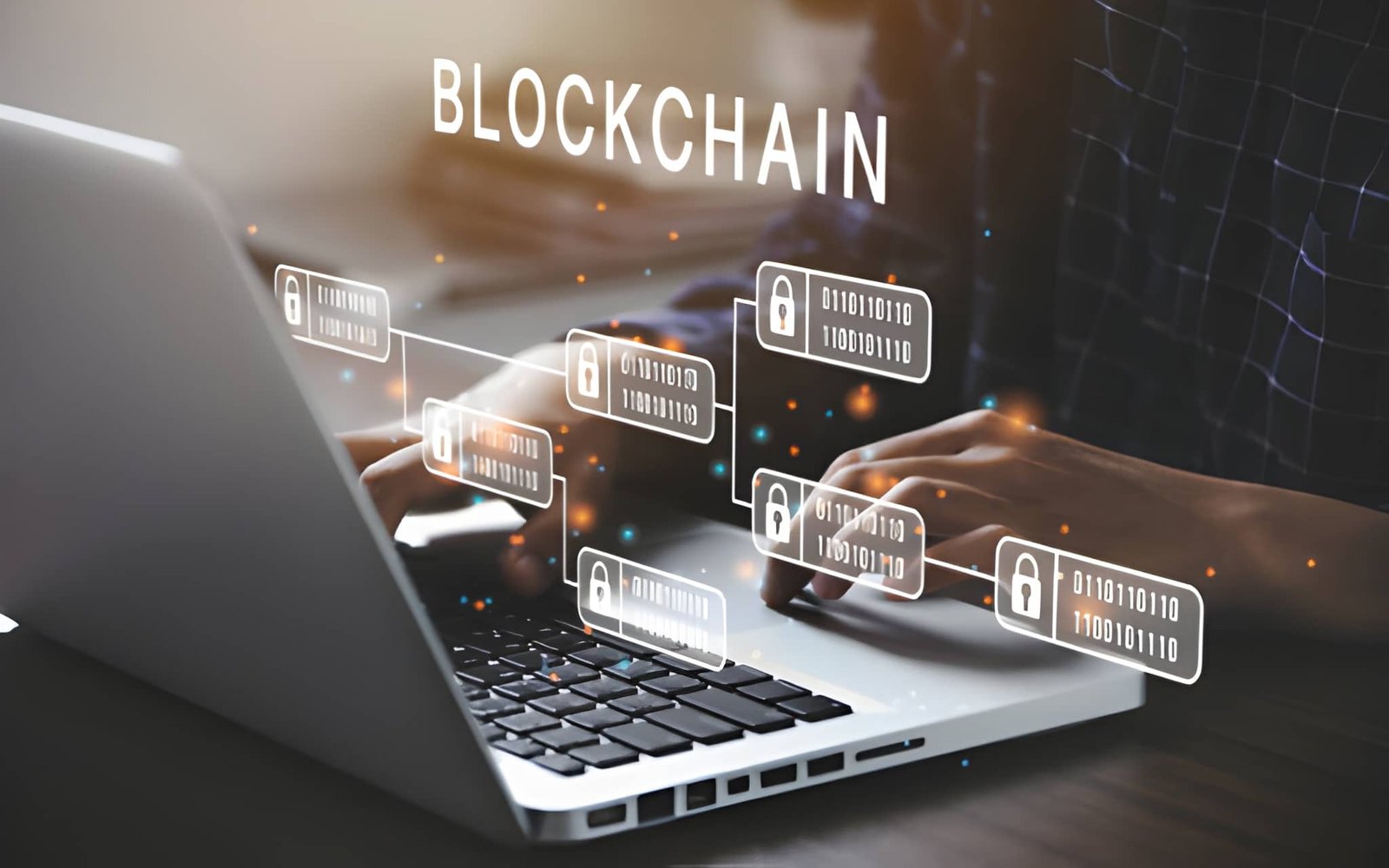
Large numbers of computers can be used to maintain a shared, and secure, immutable and transparent record of a financial transaction. This is done using a method called blockchain.
The notable features of the method are:
Decentralization – No single entity has control over the data
Immutability – The recorded data cannot be changed
Transparency – The record can be viewed by anyone who has been given permission
Security – The record is encrypted and cannot be viewed by anyone who has not been given permission
In the supply chain, blockchain serves to record every single transaction from sourcing to delivery and provide that record to every participant in the supply chain.
3. The Function of Blockchain Technology in Supply Chain Logistics
With every movement of a product through the supply chain:
Each movement logs a transaction on the blockchain
It is verified by other participants in the supply chain
The record is permanently and essentially hack proof
Consider the example of:
A farmer who cultivates organic coffee beans.
Data of the harvest is recorded on the blockchain.
Data of transport to a processing plant is also recorded.
Data of shipment and packaging is recorded.
Also, data of export and retail delivery is recorded.
All data of each stage is recorded. You have visibility and verifiability of each stage.
4. Documentation of product origins and the chain of custody of the goods.
This blockchain product supply chain enables customers to track and authenticate products and view details of the entire supply chain via a QR code.
This process instills product confidence and transparency and is an important differentiator in the market.
5. Counterfeiting and Fraud Reduction
Counterfeiting costs the global economy billions of dollars each year. The loss is especially suffered by multi billion dollar industries like:
Luxury Fashion
Pharmaceuticals
Electronics
Automotive
Cosmetics
To combat fraud and counterfeiting:
Each product has a unique digital identity.
Transactions are recorded permanently.
Changes to the record are unauthorized.
The record is certified and verifiable authenticity is provided. Counterfeit products do NOT have a transaction history. Real-time authentication is possible with a combination of smart tag technology (RFID and NFC) and integrated blockchain systems.
6. Building Confidence with Customers
Confidence is the mouthpiece of a business.
Customers want:
Ethical sourcing
Sustainable approaches
Fair Labor
Reduced footprint
Product authenticity
The marketing message is carried by the blockchain transparent approach. Confidence, Trust, and Loyalty:
Retained customers
Increased sales
Greater profitability
Higher market price
Repeat customers
7. Supply Chain Smart Contracts
Supply chain smart contracts are self executing contracts that are kept on the blockchain about an agreement.
The contract’s conditions are met. For contract conditions
Goods have to be delivered, and payment is made.
Approval is given for inspection of the quality, and the shipment is made.Temperature levels that are set to trigger.
The benefits to this approach are:
Less paperwork
Fast payment settlements
Fewer disagreements
Improved efficiency
Increased reliability and operational transparency from automation.
8. Improved Product Recall with System
The product recall system is a complicated and costly system.
The challenges of traditional recall processes include:
identifying affected batches
tracking distribution channels
retailer communication
With blockchain, affected batches can be identified, retraced, and responders can be notified in real time, which minimizes financial loss and increases consumer safety.
9. Blockchain + Sustainability Tracking
Environmental accountability is an increasing focus. Blockchains can track:
carbon emissions
water use
renewable energy
waste
Immutable data can be used to back up sustainability claims, which aids in ESG reporting and regulatory compliance.
10. Simplifying Cross-Border Trade
North-South trade is encumbered by:
customs documents
compliance checks
shipping and
middlemen
Blockchain simplifies this by digitizing trade documents, reducing paper use, and increasing the speed of customs clearance while stopping spiraling fraud.
11. Applications of Blockchain Across Industries
Food Safety
Farm to fork tracking.
Pharmaceuticals
The supply chain remains unbroken.
Luxury Goods
Brand protection.
Electronics
Responsible mining.
Automotive
Forklift compliance.
Widespread adoption of blockchain is evident across verticals.
12. Integration with IoT and AI
Combining blockchain with:
Internet of Things (IoT) sensors
AI-driven analytics
GPS tracking
Involves greater potential. IoT devices can:
Monitor temperature
Track shipment location
Detect tampering
Data is automatically recorded on blockchain and AI detects patterns of data. This is done to optimize the supply chain.
13. Challenges in Blockchain Implementation
There are challenges for the adoption of blockchain as it has advantages.
High initial implementation costs
Technical complexity
Interoperability
Data privacy
Scalability
These challenges are barriers that the evolving technology can reduce.
14. Public and Private Blockchain in Supply Chains
Public Blockchain
Fully decentralized
All participants can see it
Private Blockchain
Controlled access
Suitable for enterprise collaboration
Faster transaction speeds
Most supply chains prefer private or consortium blockchains for efficiency and confidentiality.
15. Regulatory and Compliance Benefits
With more requirements for government transparency, in compliance with these, blockchain can:
Provide and auditable record
Prevent data manipulation
Aid in the fight against corruption
Help with tax transparency
Having compliance ready to go is a competitive advantage.
16. Financial Impact of Blockchain Transparency
Blockchain also helps reduce costs by:
Fraud prevention
Faster payment settlements
Reduced administrative overhead
Efficient inventory tracking
Fewer disputes
Often, long-term ROI outweighs implementation costs.17. The Future of Blockchain in Supply Chains
Potential trends in supply chain technology include:
Tokenized supply chain assets
Decentralized identity systems
Blockchain technology tracking carbon credits
Digital twin integration
Automated compliance reporting
Mainstream enterprise infrastructure
14. Step by Step Implementation Strategy
Identify transparency gaps
Define use cases
Choose blockchain technology
Integrate IoT tracking
Onboard supply chain participants
Create smart contracts
Pilot test the system
Scale gradually
A comprehensive plan for integration is key to the adoption of blockchain technology.
FAQ
- What is the meaning of blockchain in supply chain management?
It is the use of decentralized technology to make records and keep transactions on supply chain management verifiable.
- How is blockchain able to stop counterfeiting?
It is able to ensure records of a history of a product and transactions involved that are unchangeable.
- What is product provenance?
The documentation of the history of the product and how the product has traveled through the supply chain.
- Is blockchain technology revisable?
No. That is because, in a blockchain system, it is not possible to make any revisions that are not agreed on by the entire network.
- What is the cost of implementing blockchain technique?
The starting cost will probably be high, but it will be worth it in the long run because the money lost through fraud and the money wasted due to ineffective systems will be saved.
- What is the industry that blockchain technology is most effective?
The industries that are most effective are food, drugs, counterfeiting, electronics, and the manufacturing of cars.
- What are smart contracts?
These are contracts that execute themselves and enforce the clauses in the contracts when some specified conditions are met.
- Can consumers access the data on the blockchain?
Yes. There are many systems in place that allow consumers to scan QR codes to check the authenticity and the source of a product.
- Is blockchain safe?
Yes. Data on blockchain is secured through a method called cryptographic encryption and is verified in a decentralized way.
- Does blockchain technology completely replace traditional databases?
Not really. It enhances traditional databases by adding layers of verification.
- How does blockchain technology improve the tracking of sustainability?
Environmental data is recorded immutably and verified to show the carbon emissions of resources used.
- What does the future of blockchain technology in supply chains look like?
There will be a higher level of automation compliance with the integration of artificial intelligence, the Internet of Things, and digital identity systems.
Conclusion
With blockchain technology, supply chain transparency and authenticity can be transformed. Its decentralized and immutable record systems help in fraud reduction, provenance verification, adherence to regulations, and improvement of consumer trust.
Businesses can now ascertain access to transparency which is a competitive differentiator unlike in the past where they only had to make claims. Unlike in the past, businesses can now corroborate claims of authenticity and transparency.
In industries where example and operational efficiency are highly regarded, deliberate use of blockchain technology will be highly regarded. Rapidly changing industries will value deliberate use of the technology highly. Operational efficiency, trust, and competitive advantage will be gained through deliberate implementation of the technology.
The future of supply chains is data driven, safe and transparent.
The future begins with blockchain technology.