Sentiment-Driven Marketing Automation for Growth

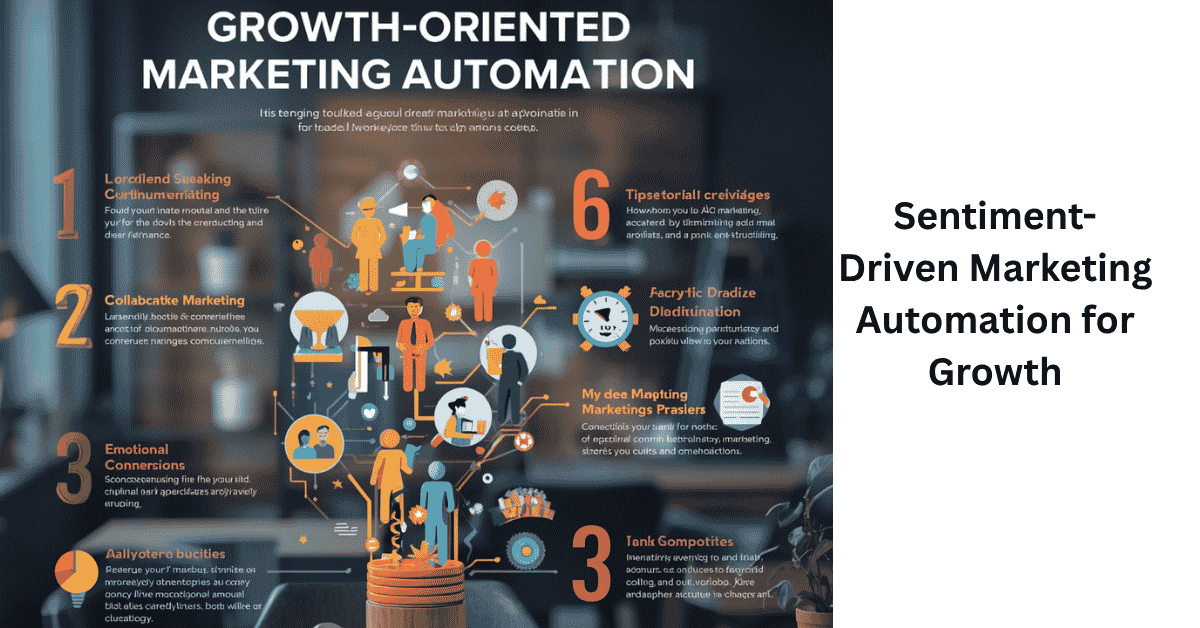
Unpredictable: Tailoring Campaigns in Real Time From the Lens of Customer Feedback, Emotions and Their Behaviors
Introduction
Today’s marketing isn’t simply about getting in front of the right people— it’s about knowing how they feel inside and acting on that feeling. In an era of reviews, social media conversations, and real-time interactions, businesses are now sitting on a veritable trove of emotional data.
Which is where sentiment-driven marketing automation comes in. With the help of artificial intelligence (AI), natural language processing (NLP) and behavioral analytics, companies are able to analyze customer sentiment—whether it is positive, negative or neutral—and automatically modify marketing campaigns on-the-fly.
The result? More relevant communications, better connection with customers and a major increase in marketing effectiveness.
What is Sentiment-Driven Marketing Automation?
Sentiment-driven marketing automation refers to the use of AI to:
Analyze customer emotions and opinions
Interpret feedback from multiple channels
Automatically adjust marketing strategies
Deliver personalized, emotionally relevant campaigns
This method relies not so much on demographics or historical purchases as how customers feel about a brand, product, or experience.
What is Sentiment Analysis?
Sentiment analysis is part of AI that analyzes data from text, speech or visuals and helps in getting emotional tone.
It categorizes sentiment into:
Positive (happy, satisfied, excited)
Negative (frustrated, disappointed, angry)
Neutral (informational or indifferent)
Advanced systems can even detect:
Sarcasm
Urgency
Emotional intensity
Sentiment-Driven Marketing Works
Data Collection
AI gathers data from:
Social media platforms
Customer reviews
Emails and chat interactions
Surveys and feedback forms
Sentiment Analysis
NLP algorithms read the data to determine the emotional tone.
Customer Segmentation
They cluster users by sentiment and behavior.
Campaign Automation
This enables automated tuning of marketing messages based on insights.
Real-Time Optimization
Campaigns are not static, and they continuously change over time as new data is collected.
Key Benefits
Hyper-Personalization
Promotional messages resonate with the target audience feelings and preferred lifestyles.
Improved Engagement
Emotionally connected content leads to higher engagement rates.
Faster Response to Feedback
Businesses have the ability to mitigate negative sentiment immediately.
Higher Conversion Rates
Results are stronger when deliverables are targeted.
Stronger Brand Loyalty
Customers feel understood and valued.
Real-Time Campaign Adaptation
The ability to respond in real time is one of the most gripping features of sentiment-driven marketing.
Example Scenario
A customer leaves a bad review for the product:
AI detects dissatisfaction
Ultimately, the system sends a personalized apology email
Listen & Find your out Of Solution or Discount
Customer sentiment improves
Simultaneously:
Positive reviewers receive loyalty rewards
Engagement campaigns are targeted at neutral users
Use Cases Across Industries
E-Commerce
Make product recommendations based on reviews
Trigger promotions for dissatisfied customers
Travel & Hospitality
Respond to guest feedback instantly
Personalize local offers based on travel experiences
Banking & Finance
Detect frustration in customer interactions
Provide proactive support
Healthcare
Monitor patient feedback
Improve service quality
Telecommunications
Tackle negative sentiment early to reduce churn
AI Technologies Behind Sentiment Marketing
Natural Language Processing (NLP)
Understands and interprets human language.
Machine Learning (ML)
Creates a data-driven model that becomes more accurate with time.
Text Analytics
Extracts insights from written content.
Speech Recognition
It analyzes tone and emotion in voice interactions.
Behavioral Analytics
Reports user activity and interactions.
Data Sources for Sentiment Analysis
AI gathers sentiment data from various sources:
Social media posts and comments
Online reviews and ratings
Customer support interactions
Email responses
Chatbots and live chats
These sources, combined, give you a complete picture of customer feelings.
Sentiment-Based Customer Segmentation
With AI, you can start taking more advanced segmentation such as:
Positive Customers
Loyal and satisfied
Receive rewards and upsell offers
Neutral Customers
Need engagement
Targeted with educational content
Negative Customers
At risk of churn
Receive support and recovery campaigns
Personalization Through Emotion
Emotion-based personalization allows businesses to:
Deliver empathetic messaging
Adjust tone and language
Offer relevant solutions
Build emotional connections
For example:
Happy customers → exclusive deals
Frustrated customers → support-focused communication
Automation in Action
Email Marketing
It shapes emails based on the sentiment of an email.
Social Media Campaigns
Artificial Intelligence comments and modifies messaging.
Ad Targeting
Advertisement Ads are personalizing based on emotional triggers.
Customer Support Integration
Marketing and support go hand in hand.
Challenges in Implementation
Data Accuracy
A misunderstanding of sentiment can result in terrible decisions.
Context Understanding
Sarcasm and cultural nuances are hard to pick up on.
Privacy Concerns
It is, of course, imperative that you handle customer data appropriately.
Integration Complexity
Requires integration between marketing tools and platforms.
Over-Automation
An excess of automation may lead to a lack of human touch.
Best Practices
Combine AI with Human Oversight
Responses must be accurate as well as sensitive.
Use Multichannel Data
Analyze sentiment across all touchpoints.
Continuously Train Models
Improve accuracy with updated datasets.
Maintain Transparency
Inform customers about data usage.
Focus on Value
Ensure campaigns genuinely help customers.
Future Trends
Emotion AI
Recognizing facial expressions and the tone of voice.
Real-Time Sentiment Dashboards
Instant insights for marketers.
Predictive Sentiment Analysis
Predicting customer feelings before they even experience them.
Hyper-Automation
Fully automated marketing ecosystems.
Integration with Voice & AR
Emotional recognition in voice assistants and interactive environments.
Impact on Marketing Strategy
Automation driven by sentiment will transform marketing from reactive to proactive:
Brands respond instantly to feedback
Campaigns become more adaptive
Customer relationships deepen
Marketing becomes more human-centric
Ethical Considerations
Data Privacy
Safeguard client data and meet compliance requirements.
Transparency
Have a clear view of the usage of sentiment data
Avoid Manipulation
Do not exploit emotions unethically.
Bias Prevention
Develop fair and impartial AI models.
FAQs:
What is sentiment-driven marketing?
It uses artificial intelligence to assess customer emotions and customize marketing efforts accordingly.
How does sentiment analysis work?
It analyses text, speech or data to identify emotional tone.
Can it improve customer engagement?
And emotionally relevant content gets more engagement.
What data is used?
From social media to reviews, emails and customer contacts.
Is it for small businesses?
Yes, lots of scalable tools are there.
What are the main challenges?
The most common issues are accuracy, privacy and integration complexity.
Can AI detect emotions accurately?
It is very good, but it can still learn to be even better by using more complex models.
How does it reduce churn?
By spotting and tackling bad sentiment early.
What industries benefit most?
E-commerce, travel, finance, telecom and healthcare.
The Future of Sentiment Marketing
More sophisticated, live and hyper-personalized experiences
Conclusion
Business It’s a major shift toward emotionally intelligent marketing automation. Being able to know what customers feel and responding accordingly in real-time can help companies design better, more meaningful, personalized and effective marketing campaigns.
With the evolution of AI technology, sentiment analysis and action based on it will become a pillar for modern marketing. The approach enables businesses not only to improve the performance of a product but also cultivate deeper and more authentic relations with customers.
In a time when emotions sway purchases, reacting marketing is not an improvement – it is the important day in customer commitment.