Next-Gen AI Loyalty & Gamification to Boost Retention

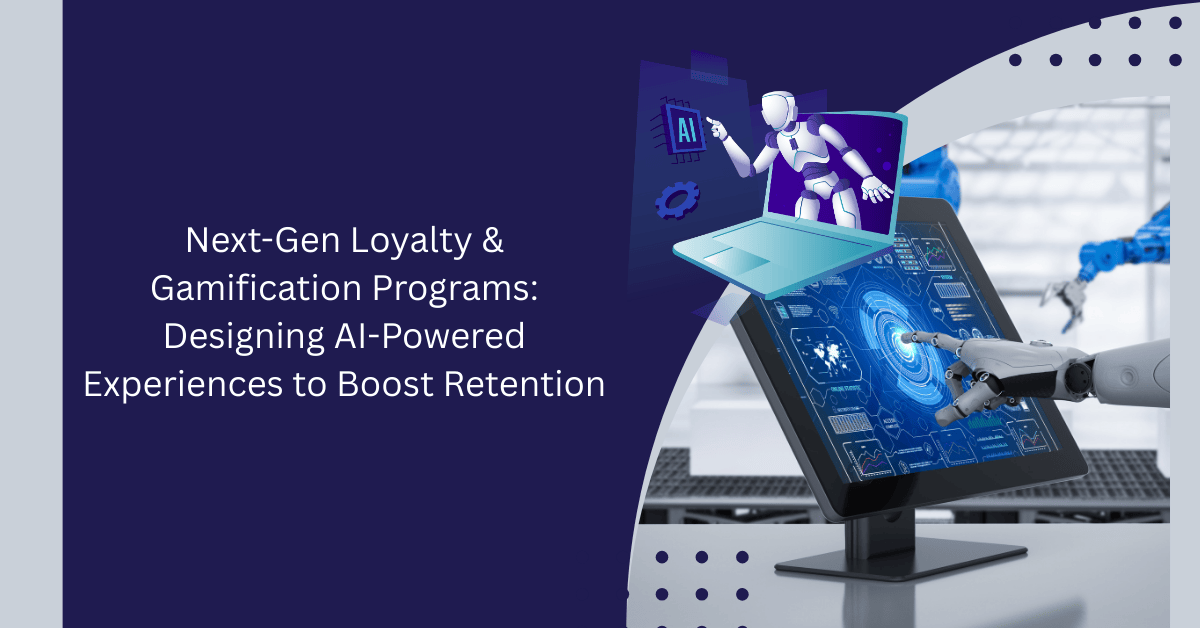
Next-Gen Loyalty & Gamification Programs: Designing AI-Powered Experiences to Boost Retention
With the fast-changing nature of e-commerce and digital services, customer retention has become more vital than customer acquisition. Today, brands compete for customer loyalty rather than a lower price or a better product. Customers expect individualized communications, fast responses to their inquiries, and appreciation for their business. This has resulted in the creation of next generation loyalty programs that use AI, gamification and personalized rewards.
We look at the different ways businesses can create loyalty experiences using AI, gamified personalized rewards, and how to create a sustained, positive emotional attachment to your brand.
Want to build long-term ecommerce growth with AI-powered loyalty automation and expert launch support? Partner with a professional ecommerce marketing team to scale your brand faster.
What are Next-Generation Loyalty Programs?
Traditional loyalty programs have relied on a simple model of awarding loyalty points for purchases. While this model has had its effectiveness in the past, it also has its shortcomings, including:
Customers forget to claim and redeem their points.
Loyalty points lack relevance to customers.
Programs do not provide emotional engagement.
Programs do not provide emotional engagement.AI, behavioral analytics, and gamification technologies have created flexible and self-adjusting loyalty programs that are tailored to individual purchasing activities, attitudes, and preferences.
Here are a few characteristics that describe emerging loyalty programs.
- Personalization. Individual user offers, rewards, and experiences are created using AI.
- Gamification. Engaging gameplay with challenges, levels, and badges turns participation into something more enjoyable and offers more satisfaction.
- Omnichannel Integration. Social, mobile app, and online engagement all present loyalty opportunities.
- Behavioral Incentives. Rewards are distributed for actions that have value in addition to the purchase such as a review, social media sharing, or referral.
- Dynamic Engagement. Customer engagement and activity drive the evolution of loyalty programs.
AI and Loyalty Programs
Because of AI, loyalty programs are now able to offer a new level of personalization that goes beyond traditional and static programs. Primarily, this is done through:
- Recommendations
AI has the ability to analyze and combine a user’s demographic information with their past purchases, browsing activity, and patterns of behavior to:
- Target individual preferences.
- Suggest relevant rewards.
- Increase engagement through timely and relevant offers. For example, a customer with specific shopping tendencies and style preferences could be recommended particular seasonal outfits by an AI-enabled retailer and be given bonus loyalty reward points for shopping the recommended.
- Predictive Analytics for Retention
AI can analyze patterns to predict customer churn risk, such as:
Decreased Loyalty Program Engagement.
Lower Purchase Frequency.
Inactivity Across Digital Channels.
In these cases, brands can take steps to incentivize, rewards, or targeted communications to re-engage customers.
Dynamic Tiering and Rewards
AI can offer real-time changes in engagement rewards tiers. This is differentiated from fixed-tier offerings in that it:
Incentivises reward attainment (beyond just high spenders).
Provides goals for participants to achieve.
Delivers tailored rewards.
Improved Customer Insights
AI analyzes large datasets to provide insight into:
Most valuable rewards (discounts vs. exclusive access vs. experiential).
Who, and via what channel, should be targeted for engagement.
Brands utilize this data to constantly improve their loyalty program offer.
Gamification in Loyalty Programs
Gamification applies game-like elements to real-world scenarios, making activities that would otherwise be blown through to receive a reward into enjoyable experiences instead.
Key Elements of Gamification
Points and Badges: completion of certain activities are rewarded (e.g. purchases, reviews, referrals), earning a greater reward in the process.
Achievements & Experiences Buy 3 products this month and get double points creates a purchase incentive.
Point Springs – Users can get recognition and reward for being at the top.
Checkpoint – Users can level up after performing an action.
Digital Incentives – Users can show engagement through special NFTs and digital collectibles.
Advantages of Game Elements
Loyalty programs become more engaging and interactive.
They provide a reason to behave repeatedly.
It can give the brand more visibility and reach.
It strengthens emotional branding.
When combined with AI personalization, gamification can add tremendous value. AI can suggest challenges to maintain users engagement with the appropriate gamification points.
Road Mapping AI Infused Loyalty Programs
In the case of next generation loyalty programs the approach has to build up in layers. For AI infused gamified loyalty programs to be successful this approach has to be in layers
- Define the Goals
Before anything else, determine what the primary goal of the program should be.
Increase purchase frequency
Improve customer lifetime value
Encourage social sharing or referrals
Gather behavioral insights for marketing
These goal oriented objectives help define AI capabilities, gamification mechanics, and reward types.
- Break Down Your Customers
Break down your customers by erecting an air barrier for your customers to cross through.
how customers purchase. (frequency, spend, recency)
customer engagement levels. (active, at-risk, dormant)
customer demographics.
Understand How Your Customers Navigate Your Store
Understand and design the customer journey by mapping out the route the customer will take through the store making use of touch points like engagement through the store.
interaction with the applications for the store.
push notification emails.
social media.
- Your Store’s Engagement Must Include Gaming
Your gamification and your engagement with the customers must have structure and must extend out like an accordion when you open it, with usable game elements like these:
bronze, silver, gold, and diamonds for levels of upgrading.
participate in an action challenge to obtain a badge.
a streak to achieve a goal of grinding.
The AI Knows What Customers Want
The ai will determine the best up and down rewards for individual customers which will be:
down grade customers to more points for a purchase.
customers will be rewarded with motivational engagement.
customers will receive social media engagement rewards.
- Stay Current
Stay one step ahead by using engagement, the losses of engagement, the optimization, the game loops, and the ai that analyzes and breaks down streams in game to set up the streams.
Case Study: Gamification and AI Collaboration
Example: A global e-commerce company wanted to enhance the number of engaged consumers on the company’s loyalty application.
Strategy:
Utilized AI to classify users based on purchasing patterns and level of activity.
Created gamified objectives that include tiered rewards and bonus streaks.
Used predicted analytics to create tailored offers and engagement.
Experiential rewards, early product access, and VIP access to events were added for top-tier users.
Impact:
Repeat purchasing increased by 35% over a period of 6 months.
App engagement increased by 28%.
Churn was reduced by 20% among segments at-risk.
Finally, this describes the power of gamification to change loyalty programs into engaging ecosystems.
Recommendations for Advance Loyalty Program
Emphasize Personalization – Use AI to create personalized offers and rewards for each customer.
Keep Gamification Simple – Avoid complex rules that can frustrate customers.
Reward Actions that Matter – Create value-driven behaviors, and encourage actions that increase business value, like referrals, reviews, or social engagements.
Utilize Omnichannel Approach – Ensure loyalty experience across mobile application, website, and physical store is seamless.
Respect the Data – Exercise caution while collecting and using customer data to maintain privacy, compliance.
Measure and Iterate – Use AI, gamification, and performance optimizations to dynamically improve customer engagement and reward systems.
New AI Driven Trends and Loyalty Programs:
- Voice and Chatbot Integration
AI-based voice assistants and chatbots can:
Remind customers about rewards
Assist customers with gamified challenges
Give real-time personalized suggestions.
This makes loyalty easy and interactive.
- NFTs and Collectibles
Gamification strategies can include NFTs to reward digital achievement. Also, brands can use unique digital collectibles to create exclusivity. This offers a more gamified experience to collectors.
- Predictive Rewards
AI can identify at-risk customers through analytics and provide pre-emptive strategies with targeted rewards to improve loyalty and gamification to drive engagement.
- Social Gamification
When game-like mechanisms are added to loyalty programs, such as a social component, friend leaderboards, group challenges, or shareable achievement badges, it increases customer engagement and the overall reach of the loyalty program.
FAQ
Q1: What is a next-gen loyalty program?
A: Next-gen loyalty programs operate on AI, gamification, and personalization to create truly engaging programs that transcend the traditional points-per-purchase model.
Q2: How is AI making loyalty programs better?
A: AI allows for personalization, Predictive Churn, real-time, adaptive rewards as well as improved analytics to increase engagement and reduce turnover.
Q3: What does gamification mean for loyalty programs?
A: The term gamification refers to motivating the customers by enhancing the interactivity of loyalty programs through the usage of game elements like points, badges, quests, and leaderboards.
Q4:What forms of rewards are most effective?
A: The rewards must represent the desires of the customers. Such rewards can be discounts, exclusive rewards, experiential rewards, free items, or digital collectibles.
Q5: What are the methods of evaluating a loyalty program?
A: Loyalty program success can be measured in the repeat purchase rate, the level of engagement, the rate of reward redemption, the rate of churn, and total ROI.
Q6: What about loyalty programs that span across several verticals?
A: Yes. The next generation loyalty programs are designed to create a seamless engagement by using all the available verticals, be it mobile, web, in-store, and social.
Conclusion
The next generation programs are changing the way brands interact with the customers for the better. The usage of AI, gamification and personalized rewards, businesses have the possibility to establish profoundly better customer retention, customer lifetime value, and emotional rapport.