Metaverse Marketplaces: The Future of Digital Product Commerce

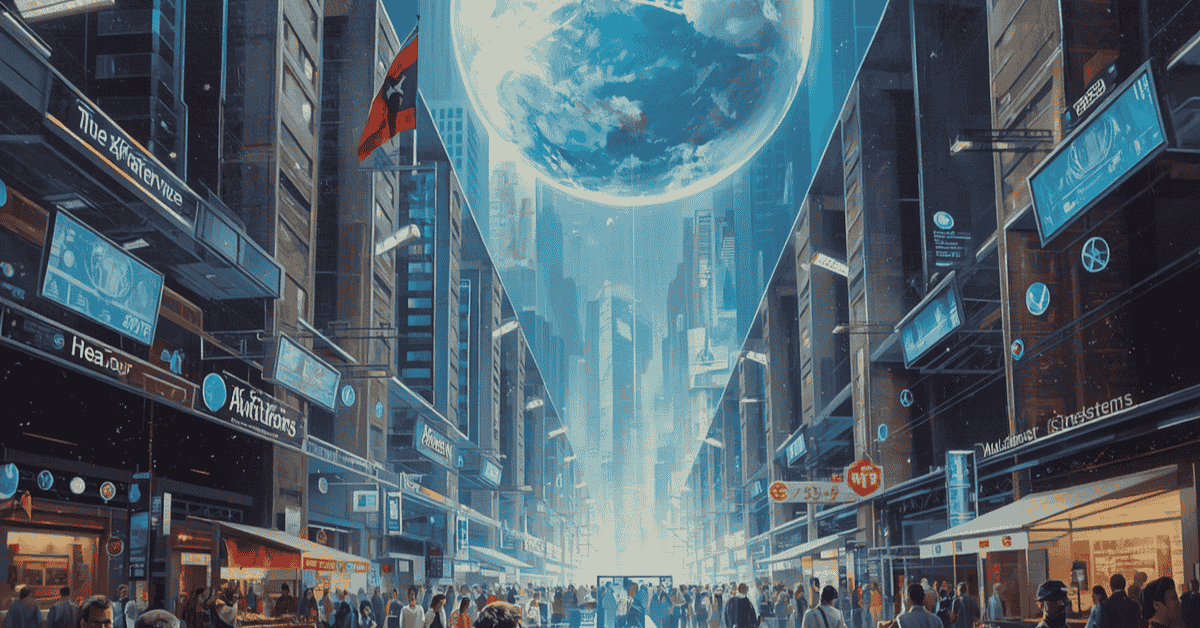
The Use of NFTs and AR and VR Technology to Market Digital and Physical Products in Immersive Environments
The developing internet
The metamorphosing internet began with individual hypertext documents, then moved to social media, mobile applications, and is now leading to far greater things – the metaverse.
The metaverse is a virtual universe that uses several technologies, including VR and AR, and blockchain, to create immersive experiences, allowing users to interact, work, play, and shop as digital avatars.
Among innovative developments is metaverse marketplaces. Users can engage in the commerce of virtually every type of good, service, and pseudo-ownership – including digital real estate, virtual apparel, NFTs, and tangible goods and services.
Among the most innovative developments are metaverse marketplaces, where users can trade digital real estate, virtual apparel, NFTs, and even real-world services. Unlock the best opportunities and expert solutions.
What is the Metaverse?
The metaverse is a collective digital universe in which participants engage through avatars, allowing them to experience different worlds, games, and social experiences in a 3D virtual environment. It is not a singular universe but a collective of multiple, interconnected, digital worlds.
Key features include:
3D environments with immersive experiences
Interactions that happen in real-time
Ownership that is digital
Worlds that are persistent
Users can:
Socialize
Game
Shop
Attend live events
What are marketplaces in the metaverse?
Metaverse marketplaces are immersive virtual environments in which users can:
Sell and buy digital assets
Trade digital items in the form of NFTs
Get virtual experiences that can be purchased
Shop for real items
In the metaverse, marketplaces are as stores are in the real world, but with a fully immersive experience.
What are the main technologies that enable metaverse commerce?
-
Virtual reality
Using headsets, users are transported to a virtual store and become fully immersed in that space.
-
Augmented reality
Digital elements are superimposed in the real world using AR. In this way, customers can see the product in their own space.
-
Blockchain Technology
With Blockchain, you get:
Secure Transactions
Transparency
Verification of Ownership
-
NFTs (Non-Fungible Tokens)
NFTs show ownership of individual digital items, including:
Artwork
Music
Digital fashion
Collectibles
-
Artificial Intelligence (AI)
AI improves user experience via:
Personalized recommendations
Virtual Assistants
Enhanced user interaction
From virtual assets to real-world services, metaverse marketplaces are redefining digital commerce. Don’t miss out—connect with professionals for the best service offerings today: https://amz-doc.com/contact/
Products Available in the Metaverse Marketplaces
- Digital products
Clothes for avatars
Digital artwork
NFTs
Virtual real estate
Assets in games
- Physical Products
Customers also have the ability to purchase items in the real world via digital stores, including:
Apparel
Electronics
Furniture
- Hybrid Products
Certain products can be found in both realms:
Purchase a real-life sneaker and receive a digital counterpart for your avatar
Steps of Commerce in the Metaverse
Step 1: User Enters Virtual World
The user accesses a metaverse platform and logs in with their avatar.
Step 2: Explore Marketplace
They navigate through digital stores or other virtual spaces.
Step 3: Interact with Products
Users have the ability to:
Examine items in 3D
Interact with virtual items
Get other info
Step 4: Make Purchase
Purchases can be made using:
Digital wallets
Cryptocurrency
Standard methods of payment
Step 5: Transfer of Ownership
Digital products go to the user’s digital wallet and physical products are shipped to the user.
Advantages of Metaverse Marketplaces
- Advanced Shopping Experience
Customers have the sensation of having entered a genuine store.
- World-Wide Access
No matter where you are, the marketplace is accessible to you.
- Digital Ownership
Owning an NFT means you hold proof of ownership
- New Revenue Streams
Digital products and experiences can now be sold by businesses.
- Individualization
The shopping experience is altered by AI to fit the needs of the individual.
Business Benefits
- Increased Market Scope
With no physical stores, companies can sell to customers around the globe.
- Unique Branding
Businesses can offer one-of-a-kind experiences in digital form.
- Increased Customer Interaction
Users are provided with an environment where they can participate and interact for an extended period of time.
- Reduced Infrastructure Costs
The physical operating structure is not required.
- Actionable Insights
Businesses obtain relevant data on customers and their purchasing decisions.
Real World Applications
- Digital Fashion Stores
Users can purchase digital clothes they can use for their avatars.
- Marketplaces for NFT Art
Art-related NFTs can be purchased by the artist and sold directly to the buyer.
- Virtual Spatial Ownership
Users can purchase and own virtual land.
- Economic Ecosystems in Gaming
Players have the ability to trade in-game items.
- Digital Concerts and Events
Digital tickets and merchandise are sold.
Possible Scenarios
Scenario 1: Shopping Mall in the Metaverse
An individual can enter a shopping mall, browse, interact with the items and buy them.
Scenario 2: Marketplace for Non-Fungible Tokens (NFTs)
An example: an artist generates a digital artwork and sells it. The buyer now has a non-reversible right of ownership to the artwork.
Scenario 3: Hybrid Shopping
A customer purchases a physical jacket and gets a digital jacket for their avatar.
Barriers and Challenges
- High Cost of Entry
VR headsets and equipment are expensive.
- Safety Issues
Digital merchandise can be hacked.
- Legal Concerns
Legal frameworks for digital property are underdeveloped.
- Low Usability
People are not accustomed to using metaverse technology.
- High Energy Consumption
Use of blockchain technology can be highly energy consuming.
Business Guidelines
Keep virtual experiences simple
Make sure payments are secure
Inform users about their rights to the digital property
Design for ease of use
Offer physical and digital combinations
Commerce in the Metaverse: Predictions
- Broader User Base
Widespread use of the metaverse will correlate with lower prices of the technology.
- Better Virtual Reality and Augmented Reality
Greater realism and the ability to be more immersive.
- Shopping will be a Daily Activity
Metaverse shopping will integrate into daily life.
- Users can move items between different virtual worlds
- New Commercial Strategies Virtual experiences will be offered via subscription.
Why Businesses Should Invest in Metaverse Marketplaces
Companies can be pioneers of the following:
- Establish competitive edge
- Enhance brand image
- Discover additional streams of revenue
- Engage with Gen Z
Conclusion
Metaverse marketplaces and the commerce of virtual goods are rapidly evolving and changing how we experience shopping. Using the latest technology in virtual and augmented reality (VR/AR), non-fungible tokens (NFTs), and Artificial Intelligence (AI), companies are able to vastly improve the experience of online shopping.
Shopping in the Metaverse allows customers to experience digital goods in an entirely different and new way by being able to view, engage with, and have ownership of the digital goods. Although there are hurdles to overcome, the opportunities are bountiful.
Emerging technology and the Metaverse signifies the next stage in digital shopping. The companies that adapt to these changes first will be most successful.
FQA
Q1. Define metaverse marketplace
It’s a system where users can purchase and sell virtual and real financial instruments.
Q2. Define NFTs
NFTs are known for the ownership rights they are based on blockchain technology and can not be duplicated.
Q3. Is it possible to acquire real goods in the metaverse?
Real world goods can be bought in the metaverse and will be delivered to you
Q4. Is shopping in the metaverse secure?
Yes, shopping in the metaverse is secure only when the shopping and payment systems are secure and the users do not engage in risky behaviors.
Q5. Is a virtual reality (VR) set required to engage with the metaverse?
Not necessarily.
Some metaverse platforms can be accessed from a mobile and or desktop computer.
Q6: Which industries utilize metaverse marketplaces?
Fashion, gaming, real estate, art, and entertainment industries.
Q7: What can be expected for metaverse commerce in the future?
More immersive experiences, better technology, and wider adoption.
Q8: What are the reasons for businesses putting money into the metaverse?
To explore new markets, increase engagement, and create innovative experiences.